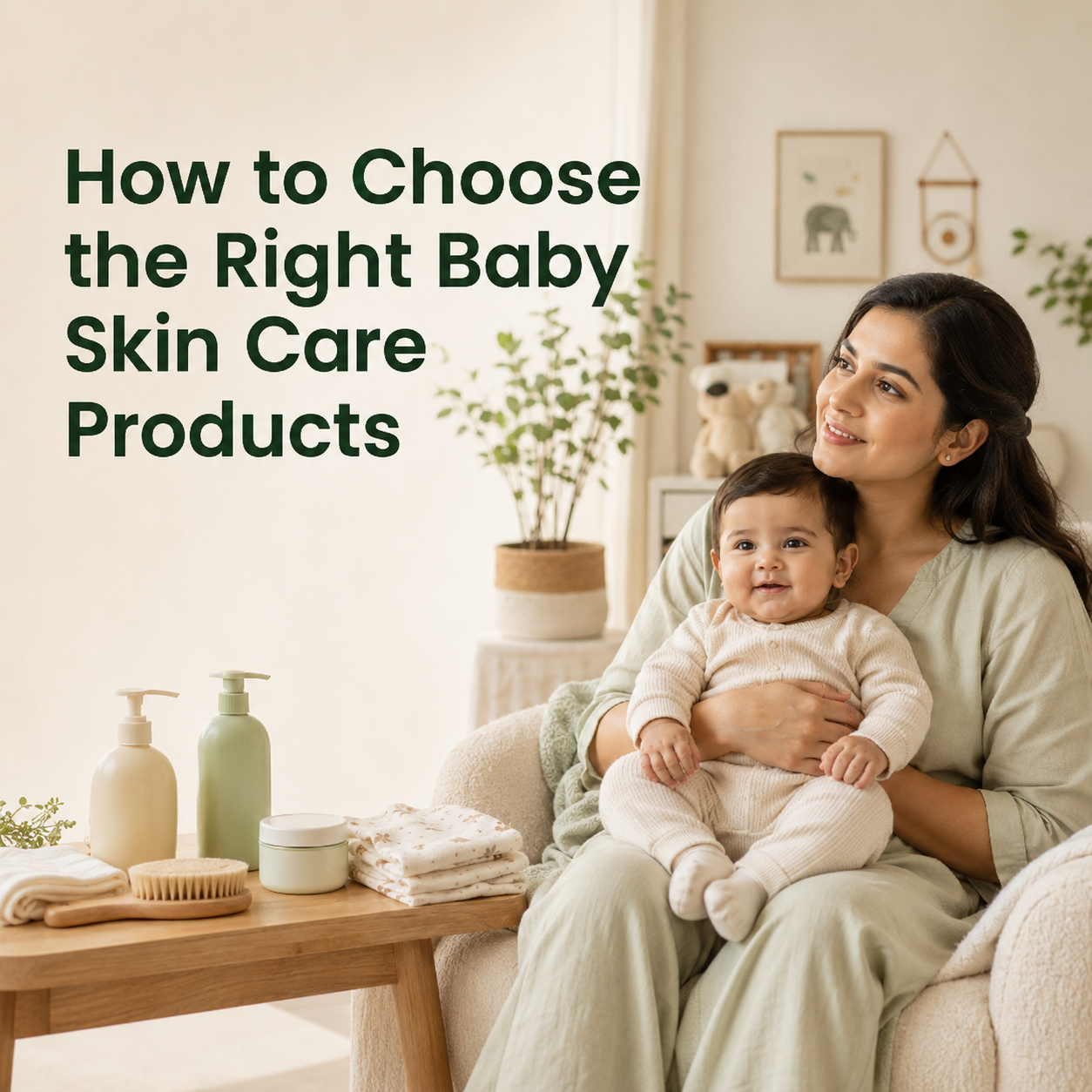
A baby’s scalp and hair can be delicate, and many parents opt to keep their baby hair care routine as simple as possible. Applying a tiny amount of baby hair oil and massaging the scalp can also be a soothing part of a baby’s daily routine for some families.
In addition, while hair oil can be beneficial, it is not right for every child, and some products are better suited to specific needs than others. Considering baby hair oil benefits, ingredients, and comfort can assist parents in making an informed choice.
According to the American Academy of Dermatology (AAD), a baby’s hair and scalp need gentle care, including the use of fragrance-free baby products and careful cleaning. The AAD baby hair and skin-care advice provides additional guidance for parents.
In addition, parents who want to experiment with an expanded set of everyday care products might be interested in the Vasu Baby Care range, which includes a variety of products for different baby and kids-care needs.
 1. What Are the Baby Hair Oil Benefits?
When used correctly, hair oil can be primarily used as part of a gentle scalp and massage care routine for a baby. It can provide lubrication for massage and gently remove the dry, flaky material from the scalp if needed.
For instance, dermatologists recommend using a tiny amount of suitable baby oil to help loosen hard crusts of dry skin before they are rinsed away since the oil will not interfere with the skin’s natural healing process.
The oil should not replace standard treatments, and parents should not try to scratch or forcibly remove the scales. See the AAD recommendations for cradle cap care.
As such, some of the baby hair oil benefits center around gentle care, including:
-
Helping to facilitate a gentle scalp massage
-
Removing dry, flaky material before cleansing
-
Assisting in an overall gentle parent-and-baby care routine
In addition, a baby’s hair care routine should not involve unrealistic expectations about the effectiveness of products. Realistic DMR (daily maintenance routine) baby hair care is vital for avoiding disappointment and unnecessary stress.
 2. How to Choose Baby Hair Oil
When learning how to choose baby hair oil, think about the baby’s age, scalp condition, and the intended use of the product.
Before buying, compare the following factors:
-
Is the product intended for babies?
-
Are there any questionable ingredients?
-
Is the product highly fragranced or perfumed?
-
What are the manufacturer’s instructions?
-
What quantity and frequency do the instructions recommend?
-
Does the baby have sensitive skin or allergies?
The best baby hair oil for babies does not necessarily have the most complex set of ingredients. Instead, a simple oil that is suited to the individual needs of the baby’s scalp, and the directions for which are followed carefully, can be a good choice.
In addition, parents should not automatically assume that all natural, herbal, or Ayurvedic oils are right for their baby, even if they are intended for children. Even natural ingredients can cause sensitization in some babies.
As such, when looking for a gentle hair oil for babies, focus on the basic elements of age suitability, indications for use, and individual tolerance rather than chasing after unproven or unrealistic benefits, such as miraculous hair growth acceleration.
 3. Baby Hair Oil for Dry Scalp: What Parents Should Know
While some parents may be tempted to choose baby hair oil for dry scalp, it is important to understand the causes of dryness and flakes.
Babies can have a cradle cap, which is a condition that makes their scalp look greasy or waxy with flaky patches.
Both the AAD and the American Academy of Pediatrics (AAP) recommend gentle cleaning and advise against scratching or picking at the scales. See HealthyChildren advice on cradle cap.
The NHS also recommends using an appropriate cream or coconut oil to help loosen the scales, followed by gentle brushing and shampooing with a baby shampoo. At the same time, they note that adults should avoid using adult shampoos and perfumed products for this purpose. See NHS cradle cap care advice.
If the baby’s scalp is consistently inflamed, pustular, bleeding, or oozing fluid and is visibly painful, a pediatrician or dermatologist consultation is in order instead of experimenting with topical treatments.
 4. How to Do Baby Scalp Massage With Oil
A baby scalp massage with oil should be a gentle procedure.
If the instructions indicate that it is safe to apply the product to the scalp, use a tiny amount of the oil and spread it over the palms or fingertips. Gently massage the scalp without pressing hard.
When doing a baby scalp massage, consider the following general advice:
-
Make sure the baby is comfortable and has been fed if needed
-
Use only a little oil
-
Gently spread the product with your fingertips
-
Avoid scratching or rubbing the scalp vigorously
-
Do not get oil in the eyes, nostrils, or mouth
-
Stop if the baby seems uncomfortable
-
Rinse and remove oil according to the product instructions when washing the hair
When washing the hair, use warm water and baby shampoo if needed.
The AAD recommends gentle scalp massage and warns against excessive shampoo use, noting that it may only be necessary a few times per week. See AAD newborn hair washing and care.
A Baby Hair Oil Checklist for Parents
Before adding a baby hair oil to a child’s hair care routine, consider the following questions:
-
Is this product intended for babies?
-
Is it for the scalp or hair?
-
Have I reviewed all ingredients?
-
Does my baby have sensitive skin or allergies?
-
Is this product highly perfumed?
-
Am I using the recommended quantity and frequency?
-
Is my baby’s scalp comfortable after using this product?
-
Am I not trying to use this product for unrealistic purposes, such as accelerating hair growth?
-
Should I consult my pediatrician before using this product?
A simple daily baby hair care routine is much easier to manage. If several new products have been used at once and the baby develops irritation, it may be impossible to determine which product caused the issue.
For parents looking into alternative Ayurvedic or traditional baby-care products, the Vasu Baby Care range includes a number of products that can be used for different purposes and are generally suitable for different ages.
It is essential to read the instructions carefully and follow the recommended indications for use for each product rather than, for instance, using body oil for the hair and scalp.
Conclusion
Understanding baby hair oil benefits is essential for making the right choice and determining if it has a place in a child’s hair care routine.
The primary focus should be on gentle scalp massage and hair care, following the product instructions carefully while choosing an oil that is intended for use with babies and has a simple set of ingredients.
When thinking about how to choose baby hair oil, it is essential to avoid unproven claims and opt for gentle care that uses products indicated for a baby’s scalp or hair.
For a more comprehensive hair care and routine, explore the Vasu Baby Care range and Vasu kids-care products and choose what suits the child’s age and daily needs.
FAQs About Baby Hair Oil
1. Is baby hair oil necessary for every baby?
No, because hair oil is an optional addition to a baby’s hair care routine. Some babies may not need anything beyond a simple hair washing and scalp care routine. Parents can add oil if they feel their child would benefit from it.
2. What is the best baby hair oil for babies?
The best baby hair oil for babies is the product that has been designed for their age, is indicated for their scalp or hair care needs, and has appropriate ingredients and instruction.
Every baby is different, so there is no single best hair oil for babies.
3. Can I use baby hair oil for dry scalp?
A baby hair oil for dry scalp may help to loosen the scales, but it is best to consult a healthcare professional before trying any remedy for cradle cap.
If the scalp remains red and irritated, the issue may not be cradle cap, and a different routine or medication may be needed.
4. How often should baby hair oil be applied?
There is no set frequency for using baby hair oil, but it is important to follow the product instructions and only use the recommended quantity.
Using more oil or applying it too often will not necessarily improve results.
5. Can natural or Ayurvedic oil irritate a baby’s scalp?
Yes, because even natural ingredients can cause irritation or sensitization in some cases.
If an unusual rash develops when a new product is used, it should be discontinued and brought to the attention of a healthcare provider.
6. Where can parents explore Vasu baby-care products?
Parents can look through the Vasu Baby Care range to find age-appropriate products for their child’s hair and overall care needs.