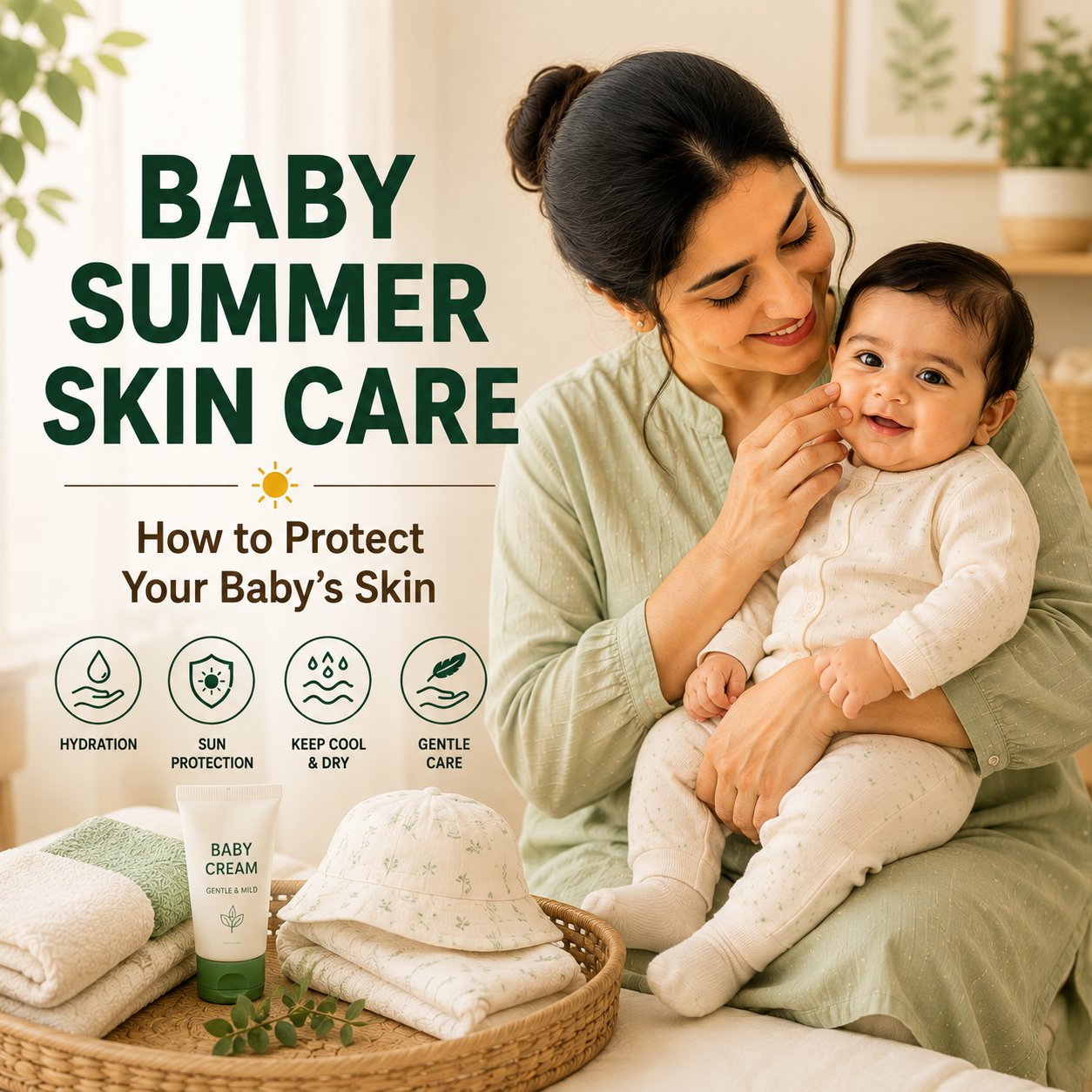
Seeing red, bumpy, or irritated patches on your little one’s delicate skin can instantly trigger anxiety for any parent. A baby’s skin is remarkably thin—up to 30% thinner than adult skin—making it far more vulnerable to irritation, climate changes, and harsh ingredients. If you are currently navigating standard infant skin flare-ups, understanding Baby Rash: Common Causes and Gentle Skin Care Tips is the very first step toward providing safe, effective comfort at home.
Every newborn or infant encounters skin redness at some point. Whether it is a mild diaper irritation, a sudden heat patch after outdoor play, or persistent dry spots, knowing what you are dealing with allows you to respond calmly.

1) What Am I Looking At? (4 Common Causes)
1. Diaper Rash
How to spot it: The skin on their bottom, thighs, or around the diaper band looks red, irritated, and feels a little warm when you touch it.
Why it happens: Moisture and friction are usually the culprits. Even if you’re quick with changes, trapped wetness, a slightly snug diaper rubbing against the skin, or a scented wipe can break down their delicate skin barrier.
How you can help: Keep the area as clean, dry, and bare as possible. Catching it early keeps a little redness from turning into raw, sore skin or a stubborn yeast issue.
2. Baby Eczema
How to spot it: Rough, scaly, dry patches that might look red, brownish, or purplish depending on your baby's skin tone. You'll usually find these on chubby cheeks, elbows, or knees. It can get itchy, so you might notice your baby rubbing their face against your shoulder or their bedsheets.
Why it happens: Eczema usually comes down to genetics—some babies just naturally have a weaker skin moisture barrier. Dry indoor air, wool sweaters, or perfumed soaps can easily trigger a flare-up.
How you can help: Hydration is key. You want to trap water in the skin right after bath time using a plain, thick cream.
3. Heat Rash (Prickly Heat)
How to spot it: A cluster of tiny, pinpoint red dots or clear little bumps, mostly tucked into warm skin folds—like around the neck, chest, armpits, or diaper line.
Why it happens: Babies have tiny sweat glands that clog very easily. If it’s warm out, or if they’re wearing one too many layers, sweat gets trapped under the skin.
How you can help: Help them cool down. Strip off extra layers, put them in loose cotton, and move to a cooler spot. It usually fades on its own pretty fast once they aren't overheating.

2) Simple Daily Habits for Happy Skin
When it comes to baby skin, simpler is almost always better. You don't need fancy routines or expensive products.
1. Keep Bath Time Brief
Limit baths to 5 or 10 minutes in warm—not hot—water, 2 to 3 times a week. Daily baths aren't necessary and can strip away the natural oils that protect their skin.
2. Skip the Fragrances
Added scents are one of the biggest reasons skin gets irritated. Skip bubble baths and scented baby lotions. Look for laundry detergents and soaps labeled "fragrance-free" rather than just "unscented" (which can still contain masking scents).
3. Embrace Diaper-Free Time
Whenever you have a few free minutes, lay down an old towel and let your baby kick around completely diaper-free. Fresh air works absolute magic on healing skin.
4. Pat, Don't Rub
After a bath, gently pat their skin dry with a soft towel—never rub. While their skin is still slightly damp (within 3 minutes), slather on a thick moisturizer to lock that water in.
5. Stick to Soft Cotton
Choose loose, breathable, 100% cotton clothing. Scratchy wool, synthetics, or clothes with stiff tags and tight elastic can easily irritate sensitive skin.

3) Red Flags: When to Call the Doctor
-
Most basic rashes settle down within a few days of gentle care. However, because babies are still building up their immunity, trust your gut.
-
Give your pediatrician a call right away if you notice any of these signs:
-
The rash comes with a fever, or your baby seems unusually sleepy, weak, or hard to wake up.
-
You see signs of infection—like bumps filled with yellow pus, oozing, crusty patches, or red lines spreading outward.
Conclusion
Caring for your infant's skin does not need to feel overwhelming. By paying attention to early signs, eliminating common triggers, and following our complete guide on Baby Rash: Common Causes and Gentle Skin Care Tips, you can keep your baby comfortable, calm, and healthy every day.
Frequently Asked Questions (FAQ)
Q: How do I safely treat diaper rash at home?
A: Change diapers the moment they are wet or dirty. Gently clean the area using warm water and soft cloth pads or gentle, alcohol-free wipes. Let the skin air-dry completely, then apply a thick, blanket-like layer of zinc oxide barrier cream before putting on a new diaper.
Q: What’s the gentlest way to manage baby eczema?
A: Stick to quick, lukewarm baths using a plain, soap-free cleanser. Right after patting them dry, put on a thick, fragrance-free cream or ointment (like plain petroleum jelly). Keep them in soft cotton clothing and use gentle, dye-free laundry detergent.
Q: How long does heat rash take to clear up?
A: Usually, heat rash goes away within 2 to 3 days once you cool your baby down, remove warm layers, and let their skin breathe in lightweight clothing.
Q: Are scented wipes really that bad?
A: They often are for sensitive skin. The fragrances and preservatives used in scented wipes can cause stinging and redness. Plain water with cotton pads or pure water-based, fragrance-free wipes are much safer choices.
Q: Can I use over-the-counter hydrocortisone cream on my baby?
A: No. You should never put medicated steroid creams on an infant unless your pediatrician specifically examines them and prescribes it. Baby skin is thin and absorbs medications much faster than adult skin, making unsupervised use risky.
Q: When is a rash considered a real emergency?
A: Head to urgent care or the emergency room immediately if the rash comes with a high fever, extreme tiredness, purple or dark red spots that don't momentarily turn white when you press on them, or if your baby is struggling to breathe.