Toddlers between 3 and 5 years old are bursting with energy and curiosity, making outdoor play one of the best ways to support their physical, social, and cognitive development. At this age, children are refining gross motor skills like running, jumping, and balancing, while also learning to interact with peers, follow simple rules, and use their imagination in open spaces. The right outdoor games can turn ordinary backyard or park time into a rich learning experience.
 Why Outdoor Play Matters So Much at This Age
Between ages 3 and 5, children's motor skills develop rapidly, and outdoor play provides the space and freedom that indoor environments simply can't match. Running, climbing, and jumping build muscle strength, coordination, and balance, while exposure to natural light supports healthy sleep patterns and vitamin D levels. Outdoor play at this age is also strongly linked to better attention spans and reduced anxiety, since unstructured, open-ended play allows children to self-regulate and explore at their own pace.
 Simple Chasing and Movement Games
Classic games like tag remain a toddler favorite, though simplified versions work best at this age - "freeze tag" where children must freeze when tagged, or "shadow tag" where kids try to step on each other's shadows, add variety without overly complex rules. Red Light, Green Light is another excellent choice, teaching toddlers impulse control while they run on "green" and stop on "red."
Ball-Based Games
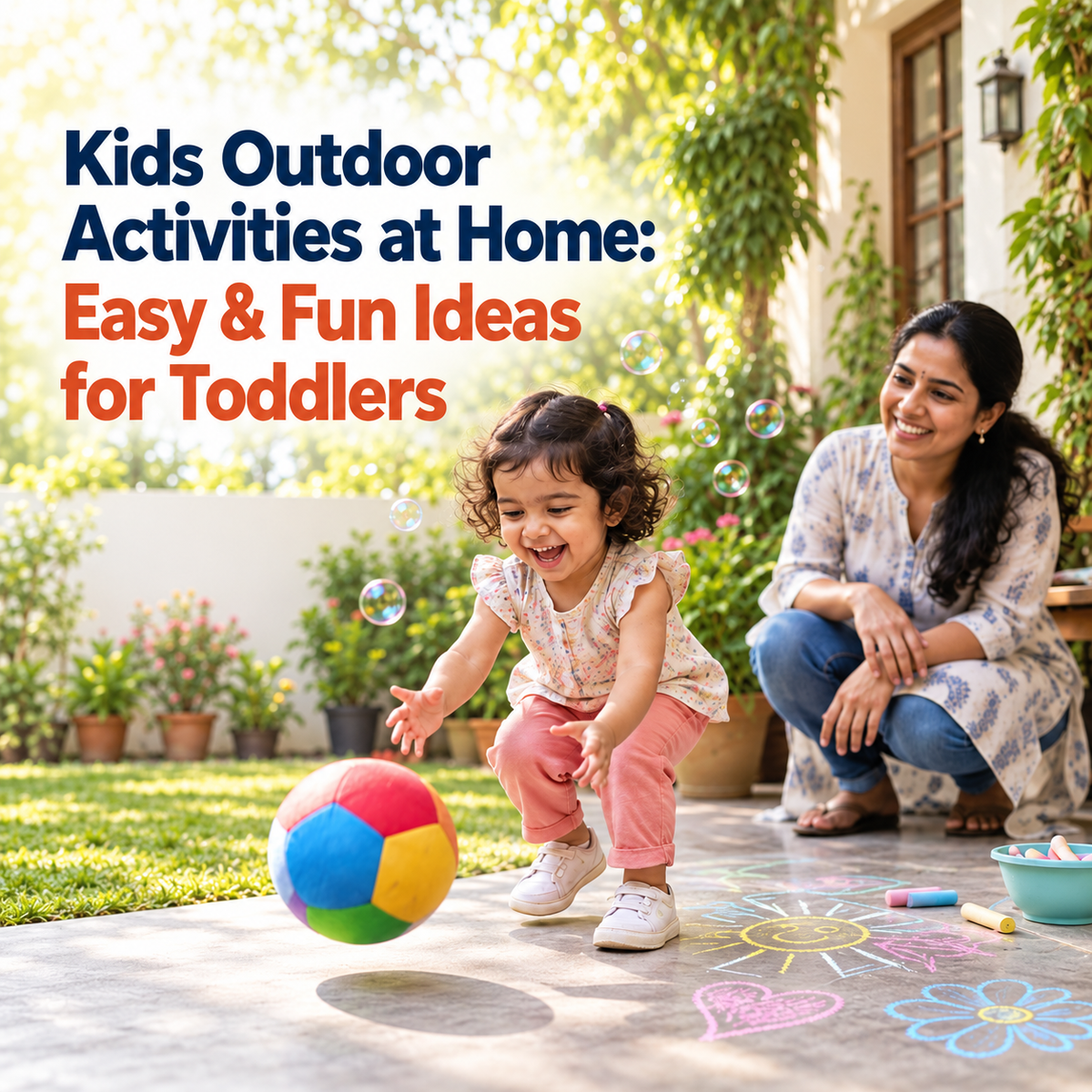
Simple ball games build hand-eye coordination and gross motor skills. Rolling a ball back and forth, gentle catch with a soft ball, or kicking a ball into a makeshift goal made from cones or bottles are all age-appropriate. For a group setting, a variation of "hot potato" played standing in a circle keeps multiple toddlers engaged at once.
 Nature-Based Exploration
Toddlers are naturally curious about the world around them, making nature scavenger hunts a wonderful outdoor activity. A simple list - find a leaf, a rock, something yellow, something round - turns a walk in the park into an engaging treasure hunt. Digging in sand or soil with small shovels, watering plants, or collecting pinecones and sticks for a later craft project also supports sensory exploration and fine motor development.
Water Play
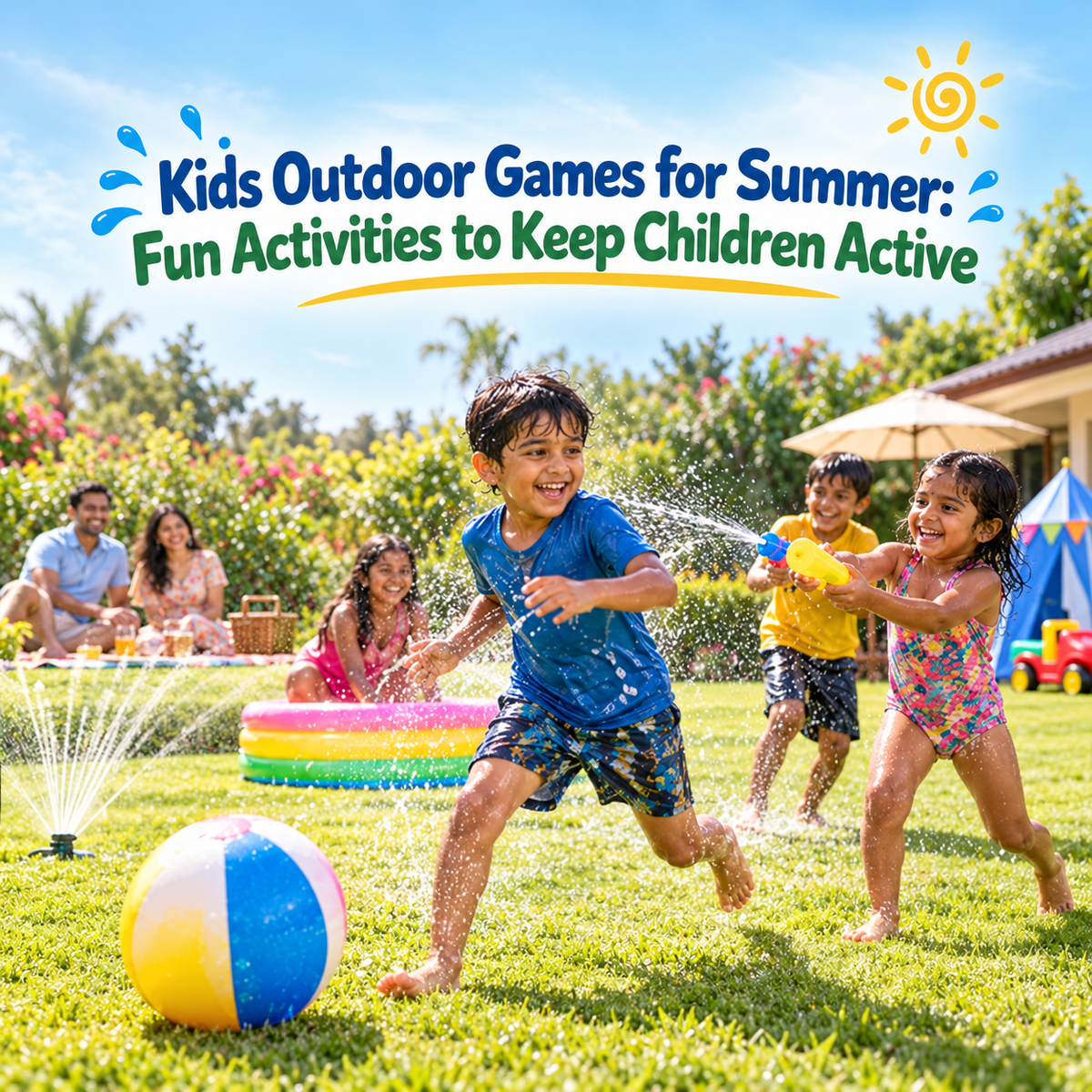
On warm days, water play is both cooling and developmentally rich. A shallow kiddie pool, a sprinkler to run through, or simply filling and pouring water between cups builds sensory awareness and basic physics understanding (heavy versus light, full versus empty). Always supervise water play closely, even in very shallow settings.
Obstacle Courses
A simple backyard or park obstacle course - crawling under a chair, jumping over a rope laid on the ground, balancing along a chalk line, and weaving between cones - builds coordination while giving toddlers a satisfying sense of accomplishment upon completion. These courses can be rebuilt in endless variations, keeping the activity fresh over time.
Bubbles and Sensory Play
Blowing bubbles for toddlers to chase and pop is a simple but consistently popular activity that builds visual tracking and gross motor skills as children run, reach, and jump to catch bubbles. Sidewalk chalk drawing, whether freeform art or hopscotch, is another low-cost activity that combines fine motor practice with imaginative play.
Imaginative and Role-Play Games
Outdoor spaces are perfect for imaginative play at this age - pretending a backyard is a jungle to explore, a pirate ship to sail, or a garden to tend as a "farmer." Simple props like a cardboard box, a stick "wand," or a bucket can spark elaborate imaginative scenarios that toddlers will often return to repeatedly.
 Keeping Safety in Mind
While outdoor play should feel free and unstructured, a few safety basics matter: supervise closely near any water, choose age-appropriate playground equipment, apply sunscreen and ensure hydration during hot weather, and check the play area for hazards like sharp objects or uneven ground before letting toddlers run freely.
 Making Outdoor Play a Daily Habit
Toddlers benefit from at least an hour or more of active outdoor play daily, though this doesn't need to happen all at once. Short bursts throughout the day - a morning walk, an afternoon in the backyard, an evening trip to the park - add up and fit more realistically into a family's routine than one long structured session.
Outdoor games at this age aren't just about burning energy - they're building the physical coordination, social skills, and confidence that toddlers will carry into their next stage of development.
FAQs
1. How much outdoor playtime does a toddler need each day? Most guidelines recommend at least 60 minutes or more of active outdoor play daily, which can be broken into shorter sessions throughout the day.
2. What are the safest outdoor games for a 3-year-old? Simple games like rolling a ball, bubble chasing, and short obstacle courses are safe and age-appropriate, especially with close supervision.
3. How can I make outdoor play fun for a toddler who prefers staying indoors? Start with short, engaging activities like bubbles or a nature scavenger hunt, and join in yourself - toddlers are often more willing to play outside when a parent participates.
4. Are group outdoor games good for toddlers who don't yet share well? Yes, simple parallel or turn-based games like rolling a ball or Red Light, Green Light introduce group play gently, without requiring advanced sharing skills.
5. What safety precautions should I take for outdoor toddler play? Always supervise near water, apply sunscreen, check the play area for hazards beforehand, and ensure toddlers stay hydrated during warm weather.