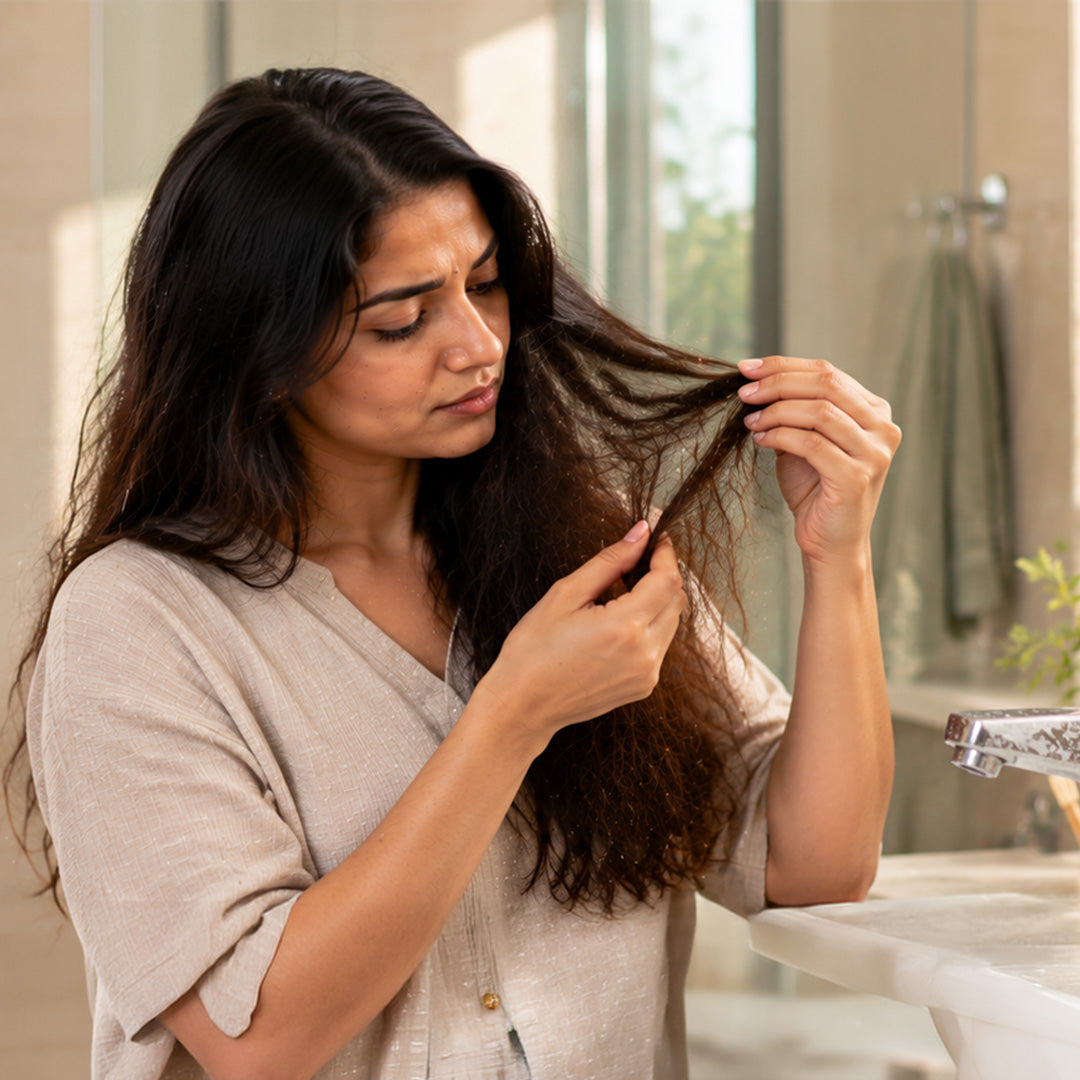

 Standing in the hair care aisle, it's easy to assume a hair mask is just a fancier, more expensive version of conditioner. Many people use the terms interchangeably, or skip one entirely, assuming the other does the same job. But the hair mask vs conditioner comparison actually comes down to two products built for different purposes, different frequencies, and different levels of hair concern.
Here's a clear breakdown of what each one is actually meant to do, and how to know which your hair needs right now.
What Does a Conditioner Actually Do?
Conditioner is a daily-use product designed to smooth the hair cuticle, reduce tangling, and add a light layer of moisture after shampooing strips natural oils away. It works quickly — usually left in for just one to three minutes — and its main job is maintenance: keeping hair manageable, soft, and easy to detangle on a day-to-day basis.
What Does a Hair Mask Actually Do?
A hair mask is a more intensive, concentrated treatment designed to penetrate deeper into the hair shaft rather than simply coating the surface. Masks typically contain a higher concentration of active ingredients — proteins, oils, or nourishing herbs — and are left on for a longer duration, often 15 to 30 minutes, sometimes with heat to help the formula absorb further. Masks are built to repair, not just maintain, which makes them especially useful for damaged, chemically treated, or extremely dry hair.
Hair Mask vs Conditioner: Key Differences at a Glance
|
Conditioner |
Hair Mask |
|
|
Purpose |
Daily maintenance and detangling |
Deep repair and intensive nourishment |
|
Frequency |
Every wash |
Once or twice a week |
|
Leave-on time |
1–3 minutes |
15–30 minutes |
|
Best for |
Everyday manageability |
Damage, dryness, chemical treatment recovery |
When Do You Actually Need a Hair Mask?
If your hair feels rough, looks dull, tangles excessively, or has been through recent coloring, heat styling, or chemical treatments, that's usually a sign conditioner alone isn't cutting it. A weekly or twice-weekly hair mask session can address the deeper damage that a quick daily conditioner simply doesn't have the contact time to reach.
 Can You Skip the Conditioner and Just Use a Mask?
Not ideally. Even with regular masking, daily conditioner still plays an important role in reducing everyday friction, tangling, and cuticle damage from brushing and styling. Think of conditioner as your everyday maintenance layer, and a mask as the occasional deep-repair session — the two work best together, not as substitutes for one another.
Building the Right Routine for Your Hair Type
For most people, a simple, effective routine looks like: shampoo, conditioner every wash day, and a hair mask once or twice a week depending on how damaged or dry your hair is. If your primary concern is hair fall rather than dryness, the mask-versus-conditioner question matters less than addressing the root cause directly — a targeted range like the Trichup Hair Fall Control Oil & Shampoo, enriched with Amla, Bhringraj, and Licorice, is formulated specifically to help reduce shedding when oil and shampoo are used together as a routine.
If your goal is more about growth, strength, and length over time, the Trichup Healthy Long & Strong Oil & Shampoo — with Aloe Vera, Neem, and Henna — is built to support exactly that. Either way, layering the right shampoo and oil combination with a weekly deep-conditioning mask gives your hair both daily maintenance and periodic repair. The complete hair care lineup is available on the Vasu Store hair care collection.
Conclusion
The hair mask vs conditioner debate isn't really about picking one over the other — it's about understanding that they solve different problems on different timelines. Conditioner handles daily manageability, while a hair mask steps in for deeper, more intensive repair when your hair genuinely needs it. Used together, with the right frequency, they cover both the everyday upkeep and the occasional deep restoration your hair actually needs.
Frequently Asked Questions
1. Can I use a hair mask every day instead of conditioner? It's not recommended. Hair masks are formulated for intensive, occasional treatment, and daily use can sometimes leave hair feeling heavy or overly soft rather than genuinely healthier.
2. How long should I leave a hair mask on? Most hair masks work best when left on for 15 to 30 minutes, sometimes with light heat from a warm towel, to allow deeper penetration into the hair shaft.
3. Do I need both a hair mask and a conditioner? Yes, ideally. Conditioner handles daily detangling and light moisture, while a mask provides deeper, periodic repair — they serve complementary rather than overlapping purposes.
4. Is a hair mask necessary if my hair isn't damaged? Even healthy hair can benefit from an occasional mask for added nourishment, though the frequency can be lower — once every couple of weeks rather than weekly.
5. Can a hair mask help with hair fall? Masks are primarily built for texture and moisture repair rather than addressing hair fall directly. For shedding concerns, a dedicated hair fall control oil and shampoo routine is typically more effective.
6. How often should I use a hair mask for chemically treated hair? Once or twice a week is generally recommended for chemically treated or color-treated hair, since it tends to need more intensive, regular repair than untreated hair.