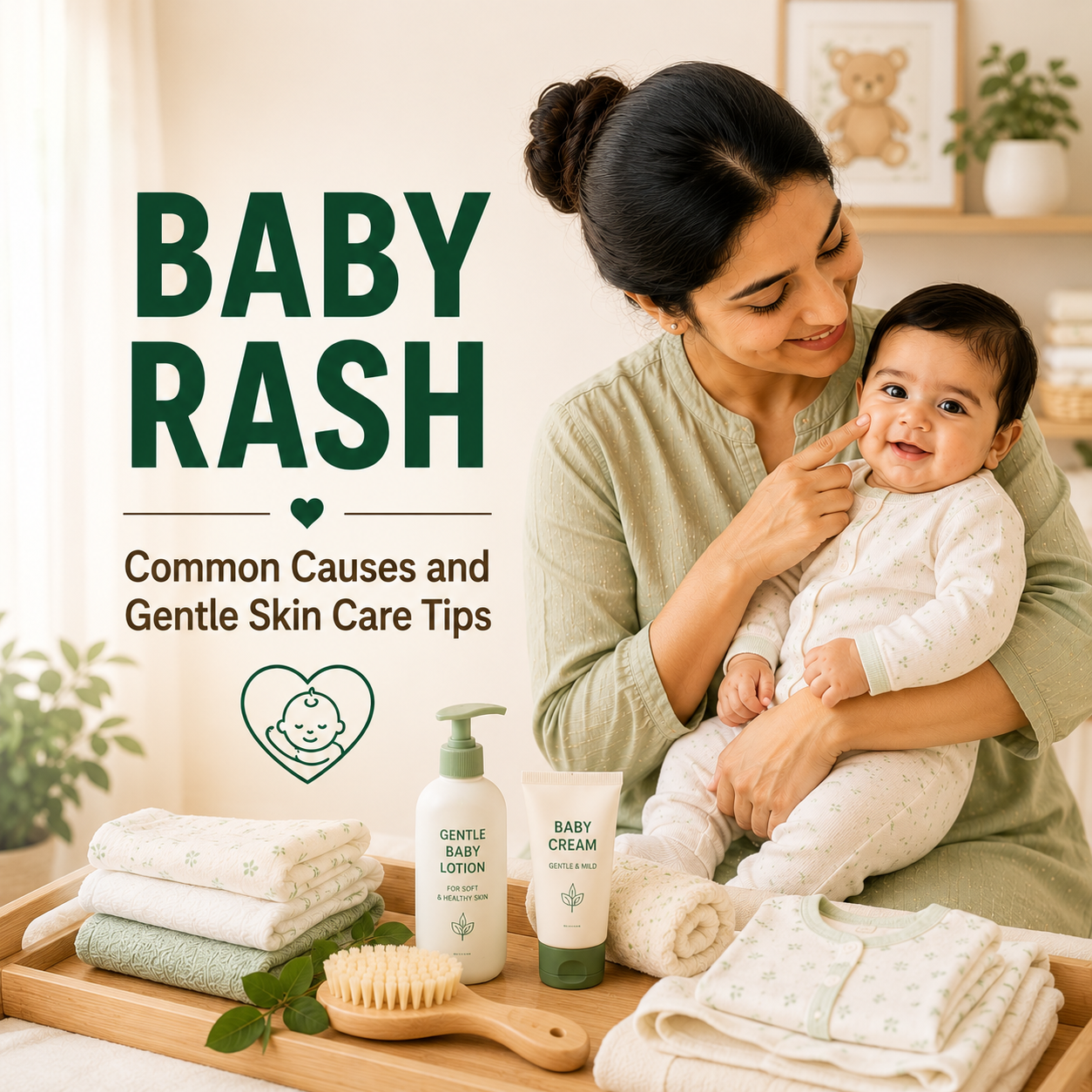
Seeing red, dry patches on your baby's delicate skin can be heartbreaking for any new parent. Infantile eczema, or atopic dermatitis, is a common skin condition that causes itchy, irritated, and sensitive skin in infants and young children. Managing flare-ups requires a gentle, consistent routine tailored to your child's needs. This guide on Baby Eczema Care: Everyday Skin Care Tips for Parents breaks down safe, non-medicinal, daily care habits to help keep your baby’s skin hydrated, calm, and healthy.
Taking care of a baby with eczema is plain exhausting. When your little one is squirming, crying, and scratching at those raw, red patches, it breaks your heart. You want to fix it fast, but with so much conflicting advice out there, figuring out what actually works can feel overwhelming.

1) Sneaky Everyday Triggers
Healing the skin starts with removing the things that trigger flare-ups in the first place. Some of the most common culprits include:
1. Parched Indoor Air
Running heaters during cold months or air conditioners in the summer pulls every bit of humidity out of the room. This dries out delicate baby skin fast, making it rough and tight.
2. Scratchy Fabrics
Wool, polyester, nylon, and stiff clothing seams act like fine sandpaper against raw spots while trapping sweat underneath.
3. Perfumes, Dyes, and Harsh Soaps
Sweet-smelling baby washes, scented lotions, and standard laundry detergents contain chemicals that burn and irritate open skin.
4. Trapped Sweat and Heat
Overdressing your baby leads to sweating. That salty sweat gathers in skin folds—especially around the neck, in the bends of elbows, and behind knees—causing sudden, intense itching.

2) Bathing Your Baby Without Drying Them Out
A quick bath washes away dirt, dead skin, and sweat, but hot water and bubbly soaps do more harm than good. The goal is to get moisture into the skin without stripping away the tiny amount of natural oils your baby produces.
How to Give an Eczema-Safe Bath:
-
Keep it warm, not hot: Hot water strips away protective natural oils fast. Test the bath water on the inside of your wrist first; it should feel barely warm.
-
Cap bath time at 5 to 10 minutes: Sitting in water for too long actually pulls moisture out of the skin instead of putting it in.
-
Ditch traditional soaps: Avoid bubble baths, scented body washes, and traditional bar soaps. Use just a tiny squeeze of a mild, soap-free, fragrance-free cleanser only where needed (like the diaper area and neck folds).
-
Pat dry gently: Wrap your baby in a soft cotton towel and press down gently to lift off water. Never rub or scrub tender skin.

3) The "Soak and Seal" Routine
Leave your baby's skin just a tiny bit damp after toweling off. Within 3 minutes, slather on a thick layer of moisturizer to trap that leftover bath water before it evaporates. Stick to thick creams from a tub or greasy ointments (like plain petroleum jelly) rather than thin, watery lotions in a pump bottle. Thin lotions contain high amounts of water and alcohol that evaporate quickly and can sting broken skin. Always wash your own hands first so you do not transfer bacteria, and reapply the moisturizer at least twice a day.
Simple Clothes and House Tweaks
Making a few gentle changes to your baby's environment can prevent flare-ups before they start:
-
Stick to 100% natural fabrics: Choose pure organic cotton or bamboo for clothes, swaddles, and crib sheets. These materials are lightweight, soft, and let the skin breathe.
-
Wash new clothes before wearing: Always wash new outfits using a scent-free, dye-free laundry detergent. Cut out scratchy clothing tags or buy tagless onesies.
-
Run a cool-mist humidifier: Keep a humidifier running in the nursery to put moisture back into dry indoor air while your baby sleeps.
-
Stop midnight scratching: Keep your baby's fingernails clipped short and filed smooth. Soft, breathable cotton mittens or footie pajamas can keep them from tearing their skin in their sleep.
-
Dress in thin layers: Instead of putting your baby in one thick, heavy outfit, use lightweight cotton layers. That way, if they start getting warm, you can easily remove a layer to prevent sweating.
Conclusion
Building a calm, consistent daily routine takes time and patience, but small adjustments yield great comfort for your baby. By prioritizing gentle cleansing, immediate hydration, and breathable fabrics, you can protect your child's delicate skin barrier every day. Relying on these simple Baby Eczema Care: Everyday Skin Care Tips for Parents will help keep your baby happy, comfortable, and resting peacefully.
Frequently Asked Questions (FAQ)
1) How often should I bath my baby with eczema?
Bathing once a day or every other day is completely fine, as long as you keep it short (under 10 minutes) and apply a heavy cream or ointment immediately after toweling off.
2) Does diapering affect skin flare-ups?
Yes. Moisture trapped inside a warm diaper will quickly irritate sensitive skin nearby. Change diapers promptly, and use a thick zinc oxide or petroleum barrier cream to prevent friction and chafing.
3) When should I call the pediatrician or dermatologist?
Reach out to your doctor if you see signs of a skin infection—such as oozing, yellow crusting, red streaks, or a fever. You should also call if the itching keeps your baby from sleeping or if the skin does not improve after a week of careful daily routine.
4) Are natural oils like coconut oil or olive oil safe?
Always check with your pediatrician first. While pure, unrefined coconut oil works well as a barrier for some babies, other plant oils (like olive oil) can actually break down the skin barrier further and make eczema worse.