Indian summers can bring strong sunlight and high temperatures, making outdoor time a little more challenging for babies. While fresh air and outdoor experiences can be enjoyable, babies have delicate skin and can become uncomfortable in the heat more quickly than adults.
The good news is that protecting your baby from the sun does not have to be complicated. Choosing the right time for outdoor activities, using shade, dressing your baby appropriately, and watching for signs of overheating can make a big difference.
 1. Why Babies Need Extra Sun Protection
A baby's skin is more delicate than adult skin and can be more easily affected by prolonged sun exposure. Young babies, particularly those under six months, need extra care when spending time outdoors.
Rather than treating sun protection as something to consider only during summer holidays or long outings, it can become part of your everyday outdoor routine.
The simplest approach is to limit direct sun exposure and make shade your first choice whenever possible.
 2. Choose the Right Time for Outdoor Activities
Timing can make outdoor activities much more comfortable for your baby. Early mornings and later afternoons or evenings are generally preferable to the hottest part of the day.
During India's summer months, try to avoid extended outdoor activities around midday when sunlight and temperatures are often at their strongest.
If you need to step outside during warmer hours, keep the outing short, choose a shaded location, and pay close attention to how your baby is responding to the heat.
 3. Use Shade as Your First Line of Protection
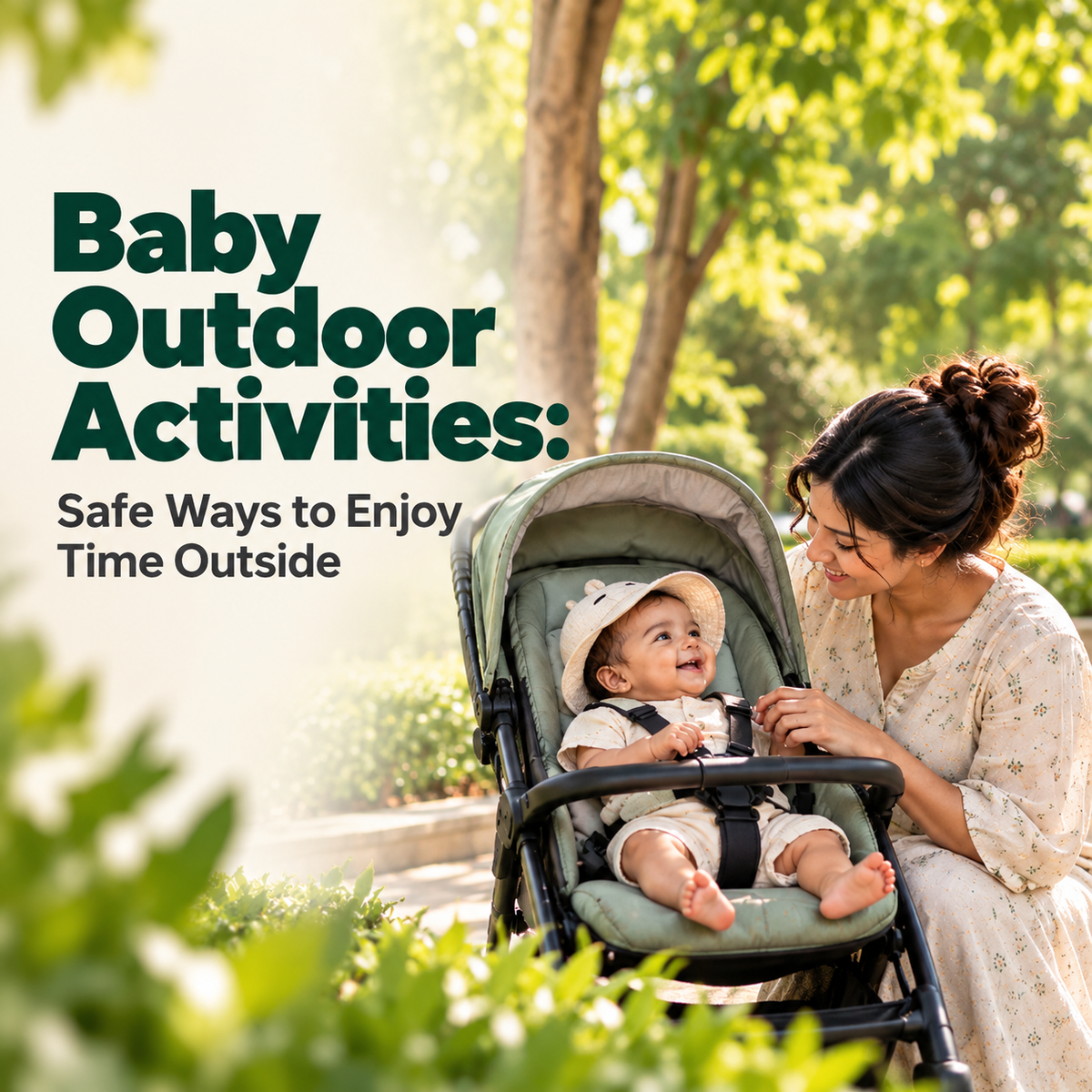
Keeping your baby in the shade is one of the simplest ways to reduce direct sun exposure. When going for a walk, choose shaded paths, covered seating areas, or parks with plenty of trees.
A stroller canopy can provide additional protection during walks, but make sure there is sufficient airflow around your baby. Avoid covering the entire stroller with a loose blanket or cloth, as this can trap heat inside.
If you're spending time outdoors in a garden or balcony, create a comfortable shaded area where your baby can stay away from direct sunlight.
 4. Choose Comfortable, Protective Clothing
Clothing can provide an important physical barrier between your baby's skin and the sun. Lightweight, breathable outfits that cover the arms and legs can be useful during outdoor activities.
Soft cotton clothing is particularly practical in hot weather because it allows comfortable movement while helping manage heat and sweat. A lightweight, comfortable hat can also help shade your baby's face and head when outdoors.
Avoid dressing your baby in excessive layers simply for sun protection. The goal is to cover exposed skin while keeping your baby cool and comfortable.
 5. What About Sunscreen for Babies?
Sunscreen is an area where age matters. For babies under six months, the preferred approach is generally to minimise direct sun exposure and use shade and protective clothing rather than relying primarily on sunscreen.
For older babies, sunscreen may be appropriate in some situations, but parents should choose products carefully and follow age-specific guidance from their paediatrician.
If you are unsure whether a particular sunscreen is suitable for your baby, speak with your healthcare professional before using it. Avoid applying new products over large areas of a baby's sensitive skin without appropriate guidance.
 6. Watch for Heat and Sun Exposure
Babies cannot always tell you that they are feeling too warm, so parents need to watch for changes in behaviour and physical signs.
A baby's hands and feet may naturally feel cooler, so checking the back of the neck, chest, or back can provide a better indication of whether they are becoming too warm.
Signs such as excessive sweating, flushed skin, unusual fussiness, or skin that feels unusually hot are reasons to move your baby into a cooler, shaded environment and remove unnecessary layers.
If your baby appears significantly unwell or you are concerned about possible heat-related illness, seek medical advice promptly.
 7. Keep Hydration and Travel in Mind
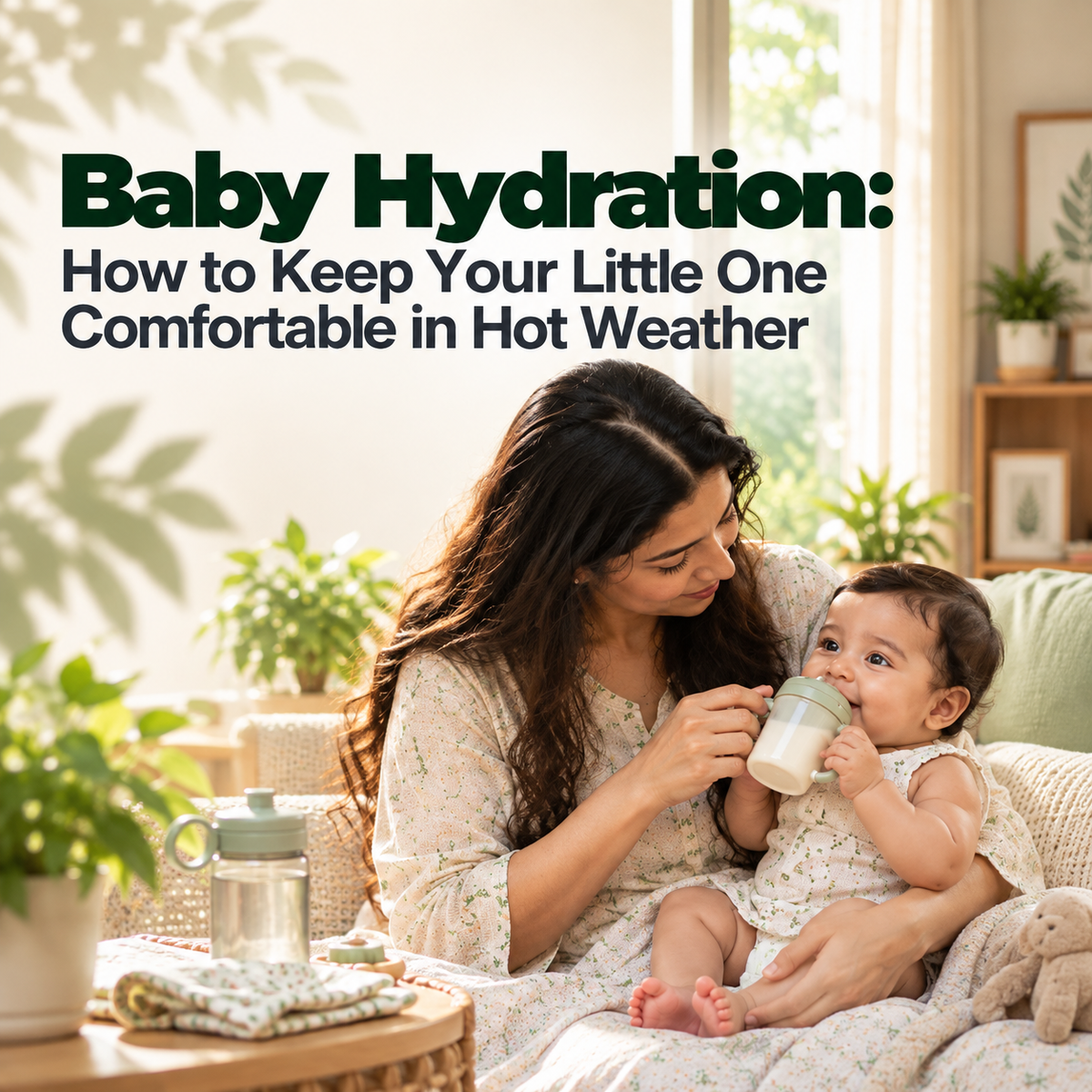
Keeping your baby appropriately fed is particularly important during hot weather. For young babies, breast milk or infant formula generally provides their required fluids unless a healthcare professional advises otherwise. Babies who are developmentally ready for water should receive it according to their healthcare provider's guidance.
Sun exposure can also happen during car journeys. Direct sunlight through windows can make a car seat area warmer, so using appropriate window shades and avoiding unnecessary travel during the hottest part of the day can help.
Never leave a baby alone in a parked car, even for a short period.
Vasu Healthcare's Baby Division focuses on gentle and practical everyday baby care needs, keeping comfort and the changing needs of growing babies in mind.
Protecting your baby from the sun does not mean avoiding outdoor time altogether. With sensible timing, shade, breathable clothing, appropriate hydration, and attention to your baby's comfort, you can make outdoor experiences more enjoyable. As your baby grows, these simple baby sun protection habits can become a natural part of your family's everyday routine.
 Frequently Asked Questions
1. How can I protect my baby from the sun?
The simplest baby sun protection measures include avoiding prolonged direct sunlight, choosing shaded areas, dressing your baby in lightweight protective clothing and using a suitable hat when outdoors.
2. Can babies under six months use sunscreen?
For babies under six months, the preferred approach is generally to minimise direct sun exposure and use shade and protective clothing. If sunscreen is being considered, speak with your paediatrician about what is appropriate for your baby.
3. What should a baby wear in hot weather?
Choose lightweight baby clothes made from breathable fabrics such as cotton. Clothing that covers exposed skin while allowing comfortable movement can provide protection without adding excessive warmth.
4. What are the signs that a baby is too hot?
Signs of overheating can include excessive sweating, flushed skin, unusual fussiness or skin that feels unusually hot. Check your baby's neck, chest or back and move them to a cooler, shaded environment if they seem too warm.
5. What is the safest way to keep a baby cool outdoors?
Keep your baby in shade, choose cooler times of the day for outdoor activities, use breathable clothing and ensure good airflow. Never cover a stroller completely with a blanket or cloth, as this can trap heat.