Taking your baby outdoors can be a refreshing change from the usual indoor routine. A short walk, some quiet time in a garden, or simply sitting together in a shaded outdoor space gives your little one an opportunity to experience new sights, sounds, textures, and surroundings.
For parents, however, outdoor time also comes with questions about weather, sunlight, crowds, and safety. The good news is that outdoor activities do not need to be complicated. With a little planning and age-appropriate precautions, you can make time outside a comfortable part of your baby's routine.
 1. When Can Your Baby Go Outside?
There is no universal age at which every baby should first go outdoors. Healthy babies can often enjoy short outings early on, provided the environment is safe and comfortable. A quiet stroller walk or time in a shaded outdoor area can be a gentle introduction.
However, your baby's individual circumstances matter. If your baby was born prematurely or has specific health concerns, speak with your paediatrician about when and where outdoor activities are appropriate.
For young babies, it is sensible to start with short outings and less crowded places. As your baby becomes comfortable outdoors, you can gradually increase the duration and variety of activities.
 2. Choose the Right Time and Place
The time of day can make a significant difference, particularly in India's warmer months. Early mornings and later afternoons or evenings are often more comfortable than the hottest part of the day.
Choose outdoor spaces that are relatively clean, shaded, and away from heavy traffic whenever possible. A quiet park, garden, balcony, or peaceful walking area can provide plenty of stimulation without exposing your baby to excessive heat or crowds.
During very hot or humid weather, keep outdoor sessions shorter and watch your baby closely for signs of discomfort.
 3. Try Simple Stroller Walks and Baby-Wearing
A stroller walk is one of the easiest ways to introduce your baby to outdoor experiences. The changing sights and sounds of the surroundings can provide gentle sensory stimulation without requiring active play.
Make sure your stroller is appropriate for your baby's age and that your baby is positioned according to the manufacturer's safety instructions.
Baby-wearing can also be convenient for short walks or errands. If you use a carrier, choose one designed for your baby's age and size and follow the manufacturer's instructions carefully. Your baby's face should remain visible and their airway should stay clear.
Whether you use a stroller or carrier, keep outdoor trips comfortable rather than focusing on how long you can stay outside.
 4. Enjoy Supervised Outdoor Play
As your baby becomes more active, outdoor play can become more interactive. On a suitable day, you might place a clean play mat or blanket in a shaded, safe area and allow your baby to enjoy some supervised floor time.
Younger babies can look at leaves, listen to birds, or enjoy simple tummy-time activities. Older babies may enjoy sitting, crawling, or reaching for safe objects around them.
Always inspect the area before placing your baby down. Look for insects, sharp objects, small stones, litter, uneven surfaces, or anything else that could pose a risk.
 5. Protect Your Baby From Sun and Heat
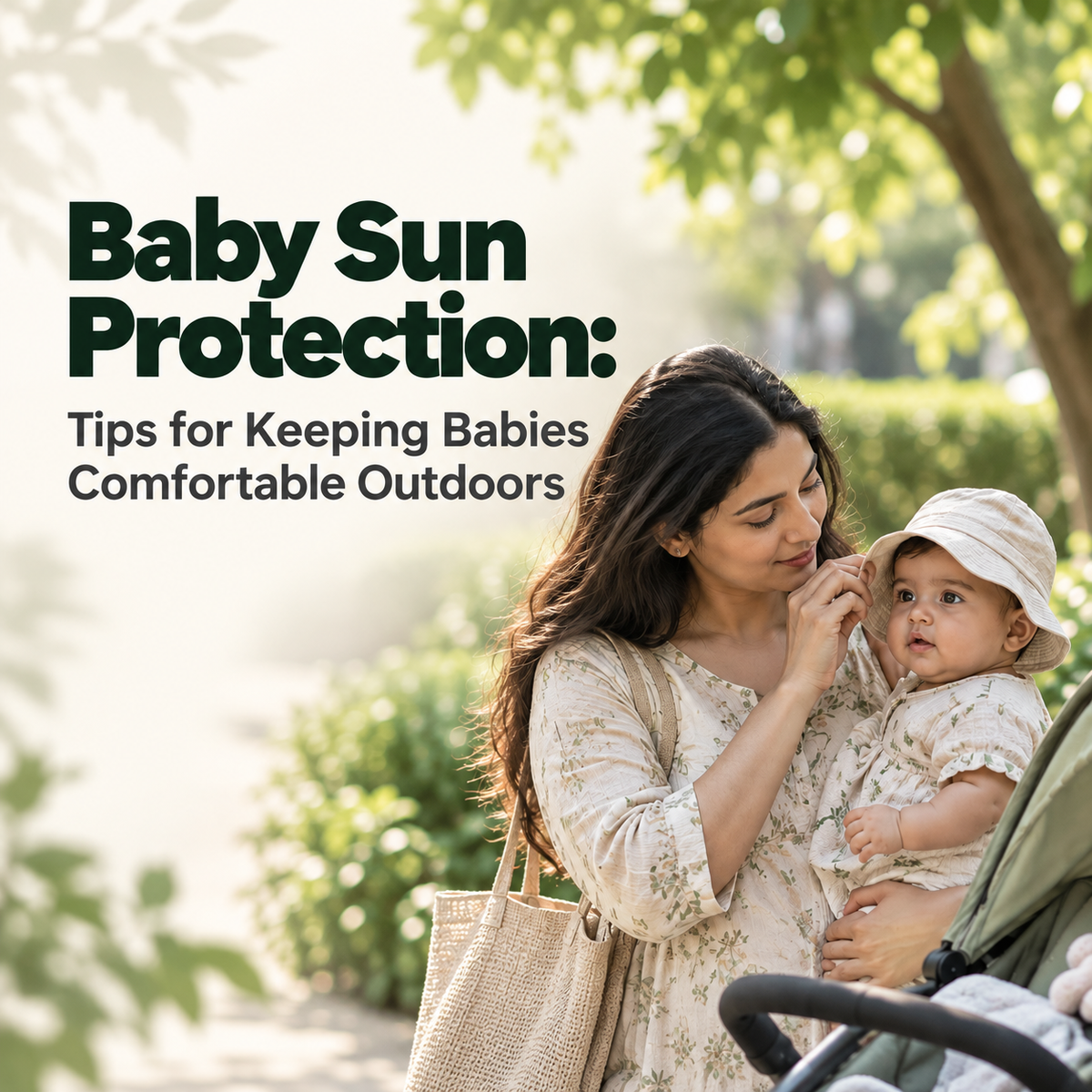
Sun and heat require particular attention when spending time outdoors with a baby. Young babies, especially those under six months, should be kept out of direct sunlight as much as possible.
Use natural shade, a suitable stroller canopy, and lightweight, breathable clothing to help protect your baby from excessive heat. Avoid covering a stroller with a loose cloth in a way that could restrict airflow or cause the temperature inside to rise.
Keep checking your baby's neck, chest, or back for signs of overheating. If your baby feels unusually hot, sweaty, or uncomfortable, move them to a cooler environment and remove an unnecessary layer.
For babies of different ages, ask your paediatrician about appropriate sun-protection measures rather than relying on a one-size-fits-all approach.
 6. Adjust Outdoor Activities for Weather and Environment
India's weather can change quickly, so outdoor plans may need to change with it. During monsoon, check the weather before leaving and avoid waterlogged, slippery, or mosquito-heavy areas. Carrying a spare set of clothes can also be useful if your baby's clothes become damp.
In winter, choose comfortable layers and adjust clothing based on the temperature rather than automatically dressing your baby in heavy clothing.
Air quality is another consideration, particularly in busy cities. When pollution levels are high, consider postponing outdoor activities or choosing a cleaner, less congested location. Similarly, crowded spaces may not be the best choice for very young babies, particularly during periods when infections are circulating.
 7. Keep an Outdoor Baby Essentials Bag Ready
Having a small bag prepared can make spontaneous outdoor trips much easier. Depending on your baby's age and the activity, you may want to carry a spare outfit, muslin cloth, diapers, wipes, a lightweight blanket, and weather-appropriate clothing.
For babies who are old enough to drink water, carry water as appropriate. Younger babies generally get the fluids they need from breast milk or formula, unless their healthcare professional advises otherwise.
As your baby grows into a toddler, the outdoor bag may also include a simple toy, snack, or other age-appropriate essentials.
Vasu Healthcare's Baby Division focuses on gentle and practical everyday baby care needs, recognising that everyday experiences such as outdoor play can become meaningful parts of a child's early years.
Outdoor time does not need to involve elaborate activities. A short stroller walk, some supervised play in a shaded garden, or simply sitting together outside can give your baby new sights, sounds, and experiences. Start slowly, observe your baby's comfort, and adjust according to the weather and environment. With these simple precautions, spending time outdoors can become an enjoyable part of growing up.
Frequently Asked Questions
1. When can a baby start going outside?
Healthy babies can often enjoy baby outdoor activities from an early age, provided the environment is safe and comfortable. Start with short outings and consult your paediatrician if your baby was born prematurely or has specific health concerns.
2. What are safe outdoor activities for babies?
Simple outdoor activities for babies include stroller walks, supervised time in a shaded garden, baby-wearing, and age-appropriate play on a clean mat outdoors. Choose activities according to your baby's age and abilities.
3. What is the best time to take a baby outside?
During warmer weather, early mornings and later afternoons or evenings are often more comfortable than the hottest part of the day. Avoid prolonged outdoor activities during extreme heat and monitor your baby's comfort.
4. How can I protect my baby from the sun while outdoors?
Keep young babies, particularly those under six months, out of direct sunlight as much as possible. Use shade, appropriate clothing and a suitable stroller canopy, while ensuring good airflow around your baby.
5. What should I carry for outdoor activities with a baby?
A baby outdoor essentials bag can include diapers, wipes, a spare outfit, muslin cloth, lightweight blanket and weather-appropriate clothing. Add age-appropriate snacks, water or toys as your child grows.