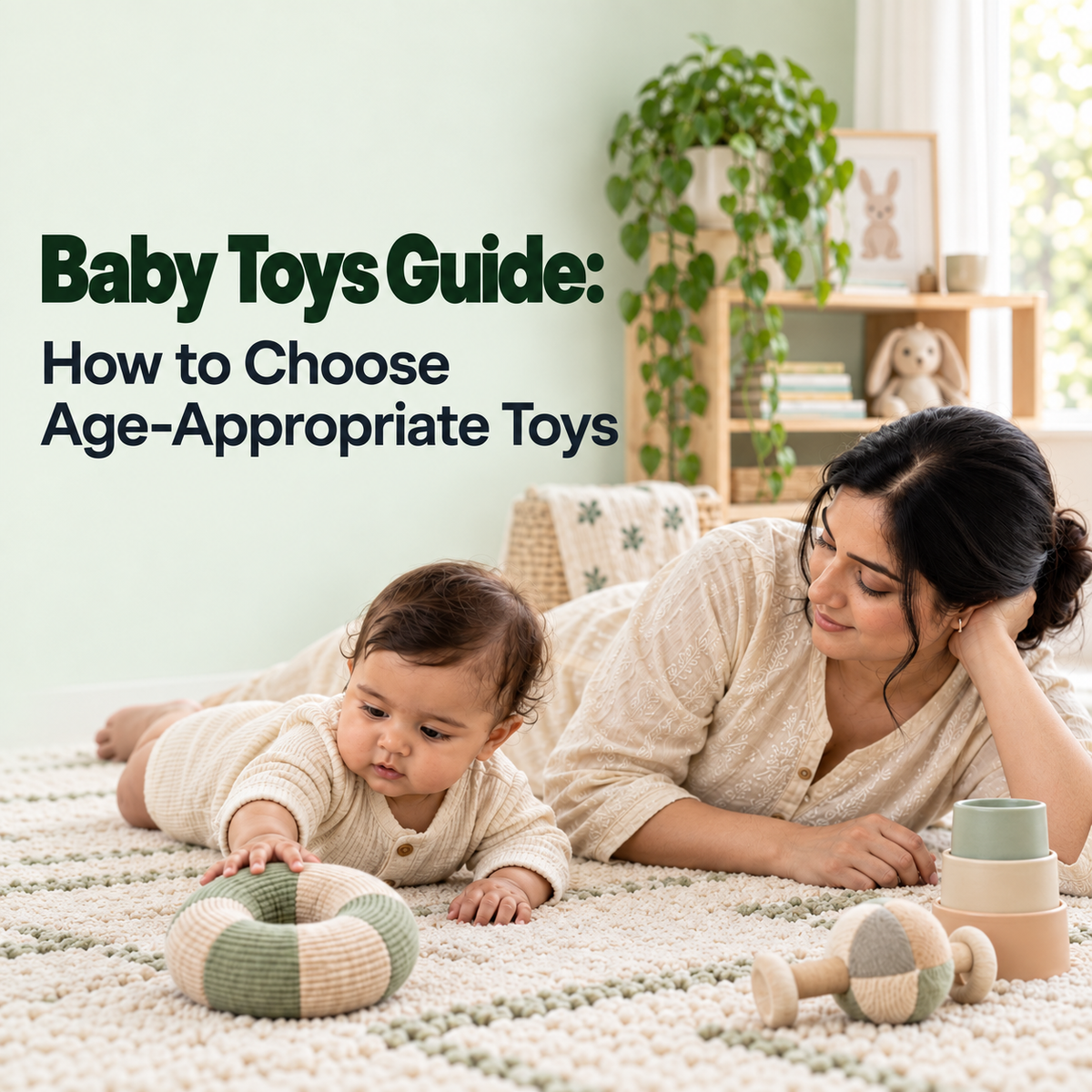
It may seem too early to think about toys when your newborn spends most of the day sleeping, feeding, and being held. But even during these first few weeks, babies are beginning to explore the world around them through their senses.
Newborn toys do not need to be complicated or expensive. At this stage, simple objects that offer gentle visual, auditory, or tactile stimulation are usually enough. More importantly, play should always happen when your baby is awake, comfortable, and supervised.
 1. Understand What Newborns Can See and Hear
A newborn's senses are still developing. Their vision is not yet as clear as an older baby's, and they tend to see best at close range. High-contrast patterns can be easier for young babies to notice than detailed designs or very soft colours.
Hearing, however, is already well developed at birth. Your baby's attention may naturally turn towards familiar voices, gentle sounds, and changes in the surrounding environment.
This means you don't need a room full of toys. A few simple sensory experiences can provide plenty of stimulation during short periods of awake time.
 2. Try High-Contrast Toys and Cards
Black-and-white patterns, simple shapes, and other high-contrast designs can be interesting to newborns because they are easier for developing eyes to distinguish.
High-contrast cards or soft toys can be placed within your baby's visual range during supervised awake time. You can slowly move them from one side to another and allow your baby to follow the movement naturally.
There is no need to keep the toy directly in front of your baby for long periods. A few minutes at a time is enough, especially when your newborn is still getting used to visual stimulation.
 3. Introduce Gentle Sounds and Soft Rattles
Newborns often respond to familiar voices and gentle sounds. A soft rattle with a quiet sound can be introduced during awake time and moved slowly from one side of your baby to another.
This can encourage your baby to listen and gradually notice where a sound is coming from. Choose rattles specifically designed for newborns and avoid anything that produces a harsh or excessively loud sound.
Always inspect rattles and other toys regularly to make sure they remain securely made and free from loose components.
 4. Explore Safe Textures and Baby-Friendly Mirrors
Simple textured toys can introduce newborns to different sensations. Soft fabrics with subtle differences in texture can be interesting as your baby gradually becomes more aware of their hands and surroundings.
Baby-safe mirrors can also provide visual stimulation. Your newborn will not yet understand that they are looking at their own reflection, but the movement, light, and face-like image can still capture their attention.
Choose mirrors specifically designed for babies and made from materials that are unlikely to shatter. As with all toys, use them only during supervised awake time.
 5. Use Mobiles Carefully
A simple mobile with contrasting shapes or patterns can encourage a newborn to look at and follow moving objects. However, safety is particularly important with anything placed near a crib or sleep area.
If you use a mobile, make sure it is securely attached and positioned completely out of your baby's reach. It should never have loose parts that your baby could pull down.
A mobile is intended for visual stimulation while your baby is awake. It should not be treated as a toy to be placed inside the sleep space.
 6. Remember That Your Face and Voice Are Toys Too
Some of the best early experiences do not come from toys at all. Your face, voice, touch, and expressions are naturally engaging for a newborn.
Talking softly, singing, smiling, making gentle facial expressions, or simply holding your baby close during awake time gives them opportunities to observe faces and listen to familiar sounds.
You can also include a simple toy during these interactions, but there is no need to constantly entertain your newborn. Quiet periods of observation and interaction are perfectly normal.
 7. Keep Newborn Play Simple and Safe
Newborns become tired quickly, so playtime should be short and gentle. If your baby turns away, becomes fussy, yawns, or appears overstimulated, give them a break and allow them to rest.
Avoid toys with small detachable parts, loose threads, sharp edges, long strings, or other features that could create a safety risk. Any toy used with a newborn should be age-appropriate and inspected regularly for damage.
Once your paediatrician has advised that supervised tummy time is appropriate, you can place a simple high-contrast toy within your baby's line of sight to encourage them to look and gradually lift their head. Always supervise tummy time and never leave your baby unattended.
Vasu Healthcare's Baby Division focuses on gentle and practical everyday baby care needs, recognising that the earliest stages of development are built around simple, meaningful experiences.
Choosing the best toys for newborns does not mean buying the biggest or most colourful toy collection. A high-contrast card, a soft rattle, a baby-safe mirror, or simply your voice and face can provide plenty of stimulation during these early weeks. Keep play gentle, follow your baby's cues, and let these small moments become the beginning of a lifelong journey of discovery.
Frequently Asked Questions
1. What are the best toys for newborns?
The best toys for newborns are simple, age-appropriate toys that offer gentle visual, auditory or tactile stimulation. High-contrast cards, soft rattles, baby-safe mirrors and simple textured toys can be suitable options during supervised awake time.
2. Are high-contrast toys good for newborns?
Yes. High-contrast toys for newborns, such as black-and-white cards and simple patterned toys, can be easier for developing eyes to notice and can encourage visual tracking during short periods of awake time.
3. Can newborns play with rattles?
Newborns can be introduced to rattles for newborns during supervised awake time. Choose a lightweight rattle designed for their age, with a gentle sound and no small or detachable parts.
4. Are baby mirrors safe for newborns?
A baby-safe mirror can provide visual stimulation during supervised play. Choose one specifically designed for babies and made from materials that are unlikely to shatter, and inspect it regularly for damage.
5. How long should newborns play with toys?
Newborns usually have short periods of alertness, so newborn playtime can be brief and gentle. Watch your baby's cues and give them a break if they turn away, yawn, become fussy or appear overstimulated.