Walk into any toy aisle and you will find colourful toys designed for babies at almost every age and stage. With so many options, it can be difficult for parents to know what their baby actually needs. A toy that is perfect for a toddler may be too complicated or even unsafe for a younger baby.
Choosing age-appropriate toys is not about filling your baby's room with more toys. It is about finding simple, safe options that match your baby's current abilities and encourage them to explore, move, and learn through play.
 1. Why Age-Appropriate Toys Matter
Babies develop new physical, sensory, and cognitive skills as they grow. While every child develops at their own pace, their play needs naturally change over time.
A newborn may be fascinated by a simple moving object or a gentle sound, while an older baby may want to grab, stack, push, or explore objects. Choosing toys that match these changing abilities can make playtime more engaging.
Age recommendations on toy packaging can be a useful starting point, but parents should also consider their child's individual development and abilities.
 2. Toys for 0–3 Months: Focus on Sensory Exploration
During the first few months, babies are beginning to understand the world through their senses. They may respond to high-contrast patterns, gentle sounds, movement, and different textures.
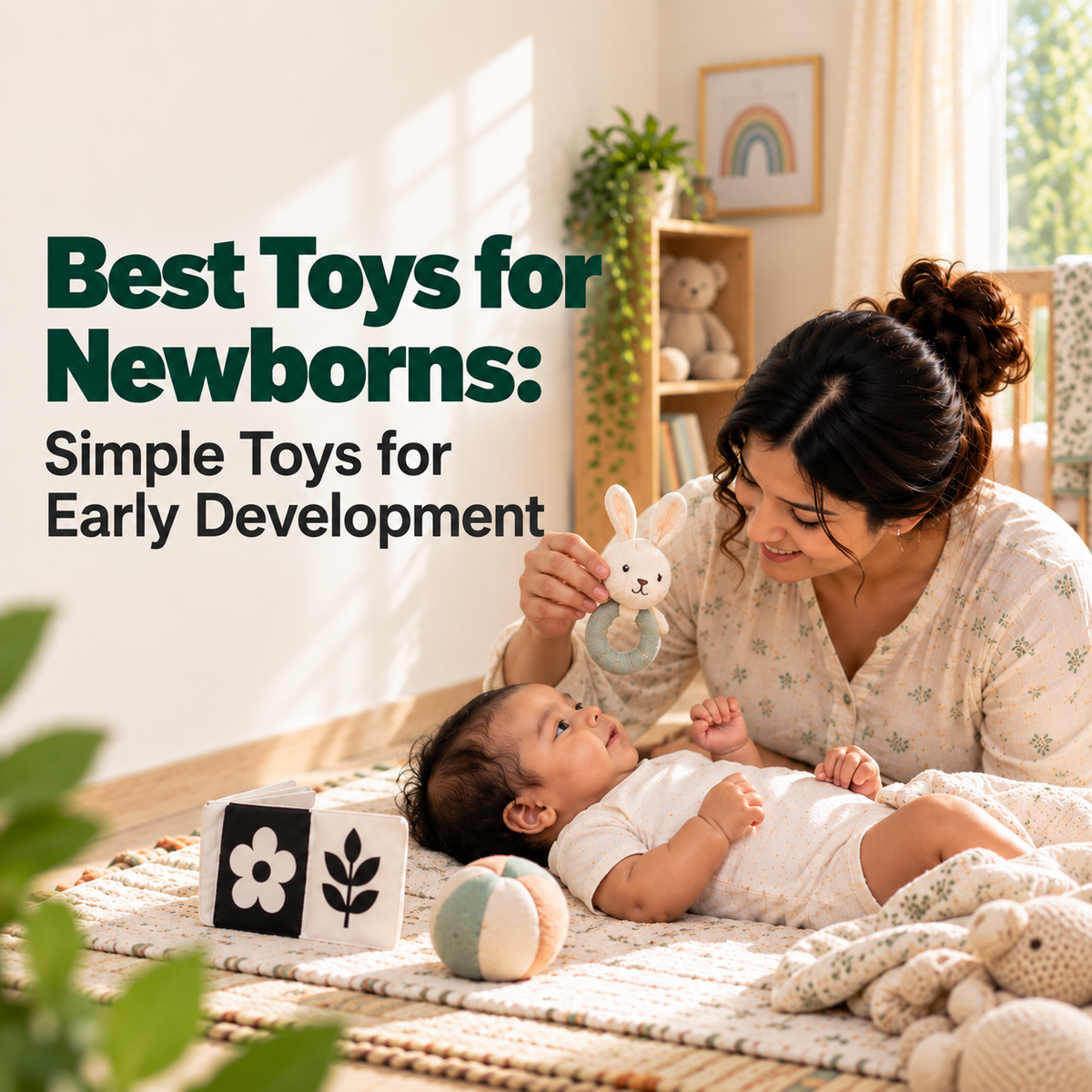
Simple rattles, soft sensory toys, and high-contrast toys can provide opportunities for visual and auditory exploration. Toys should always be age-appropriate, securely made, and free from parts that could become detached.
If using a mobile, make sure it is securely installed and positioned well out of your baby's reach. Mobiles and other toys should not be left loose inside a baby's sleep space.
At this stage, you do not need many toys. A few simple options can provide plenty of stimulation.
 3. Toys for 3–6 Months: Encourage Reaching and Grasping
As babies gain better control over their hands and arms, they begin reaching for and holding objects. This is a good time to introduce lightweight toys that are easy for small hands to grasp.
Soft rattles, textured toys, large teething toys, and lightweight rings can encourage babies to practise reaching and holding. Toys that make a gentle sound when moved can also help babies begin to understand the connection between their actions and what happens next.
Make sure anything offered to your baby is large enough not to become a choking hazard and does not have small detachable parts.
 4. Toys for 6–12 Months: Explore, Move, and Discover
Between six and twelve months, babies become much more active. They may sit, crawl, reach for objects, and explore almost everything by touching and putting things in their mouths.
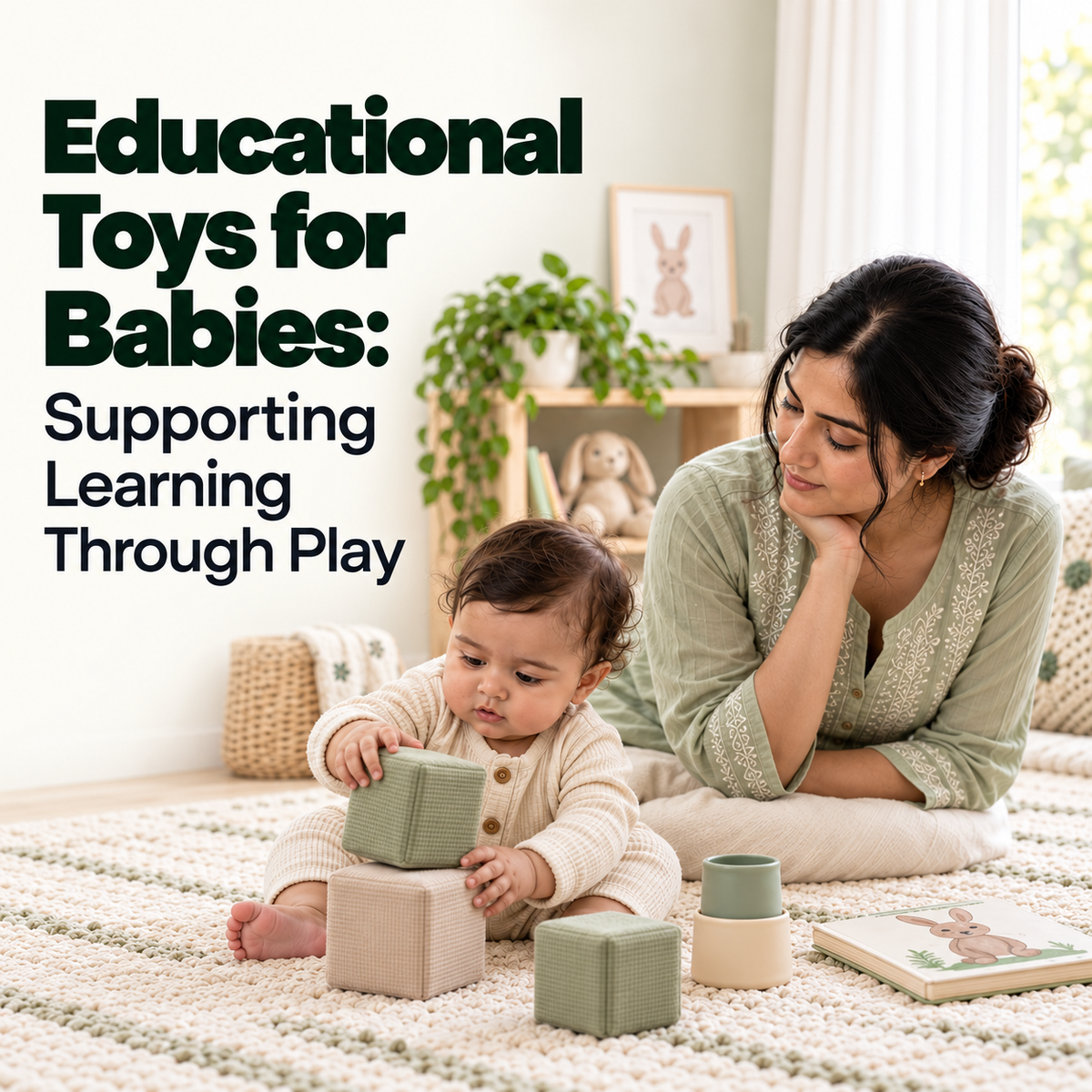
At this stage, simple stacking cups, soft blocks, large nesting toys, textured balls, and age-appropriate cause-and-effect toys can encourage exploration.
Toy safety becomes particularly important because mouthing is still a normal part of how babies investigate objects. Choose toys made from suitable materials, avoid small pieces, and check toys regularly for cracks, loose parts, or damage.
Toys should also be easy to clean because they are likely to end up on the floor and in your baby's hands and mouth.
 5. Toys for 12–18 Months: Movement and Imitation
Once babies start standing and walking, they often become interested in toys that allow them to move around and imitate everyday activities.
Age-appropriate push toys, simple stacking or building toys, and larger pretend-play items can encourage movement and imagination. A toy telephone, large pretend food pieces, or simple household-themed toys may become especially interesting as your child begins copying what they see adults doing.
Choose toys that allow your child to explore independently while still being appropriate for their developmental stage. Avoid toys with complicated mechanisms or small pieces that are not suitable for young toddlers.
 6. Check Toy Safety at Every Age
Regardless of your baby's age, safety should come before appearance or entertainment value. Before giving your child a toy, check the recommended age range and inspect it for loose pieces, sharp edges, cracks, or broken components.
Avoid toys with small detachable parts that could be swallowed. Be especially careful with batteries, magnets, cords, and other small components that may pose serious risks if accessible to a young child.
Soft toys, teethers, and frequently used toys should also be checked regularly for signs of wear and tear. If a toy becomes damaged, it is better to replace it rather than continue using it.
Always supervise young children during play, particularly when they are using a new toy for the first time.
 7. Choose Toys Based on Your Baby's Interests
Age recommendations are useful, but they are not a strict measure of what your baby should or should not enjoy. Every child develops at their own pace and may show interest in different types of play.
You also do not need a large collection of toys. Babies can often engage deeply with a few simple toys, especially when parents play alongside them. Rotating toys every few days or weeks can also make familiar toys feel interesting again.
Vasu Healthcare's Baby Division focuses on gentle and practical everyday baby care needs, recognising that healthy development also includes opportunities for safe and meaningful play.
Choosing the right toys is ultimately about finding a balance between safety, age-appropriateness, and engagement. Instead of following every new toy trend, observe what your baby enjoys, choose toys that suit their current abilities, and give them plenty of opportunities to explore at their own pace.
 Frequently Asked Questions
1. What are age-appropriate toys for babies?
Age-appropriate toys are toys designed to match a baby's developmental stage, abilities and interests. They should be safe, easy to use and suitable for the child's age and level of development.
2. What toys are suitable for newborns?
For newborns, baby toys for 0–3 months can include high-contrast toys, soft sensory toys and simple rattles that encourage visual and auditory exploration. Always ensure toys are securely made and free from small or detachable parts.
3. What toys are best for babies aged 6–12 months?
Toys for 6–12 month old babies can include stacking cups, soft blocks, large nesting toys, textured balls and simple cause-and-effect toys. Choose options that encourage reaching, grasping, movement and exploration.
4. How do I choose safe toys for my baby?
When choosing safe toys for babies, check the recommended age range and inspect toys for small parts, sharp edges, cracks, loose components, magnets, batteries and cords. Toys should be checked regularly for damage and cleaned when needed.
5. How many toys does a baby need?
There is no fixed number of baby toys a child needs. A small selection of simple, age-appropriate toys can provide plenty of opportunities for play. Rotating toys can also keep familiar options interesting as your baby grows.