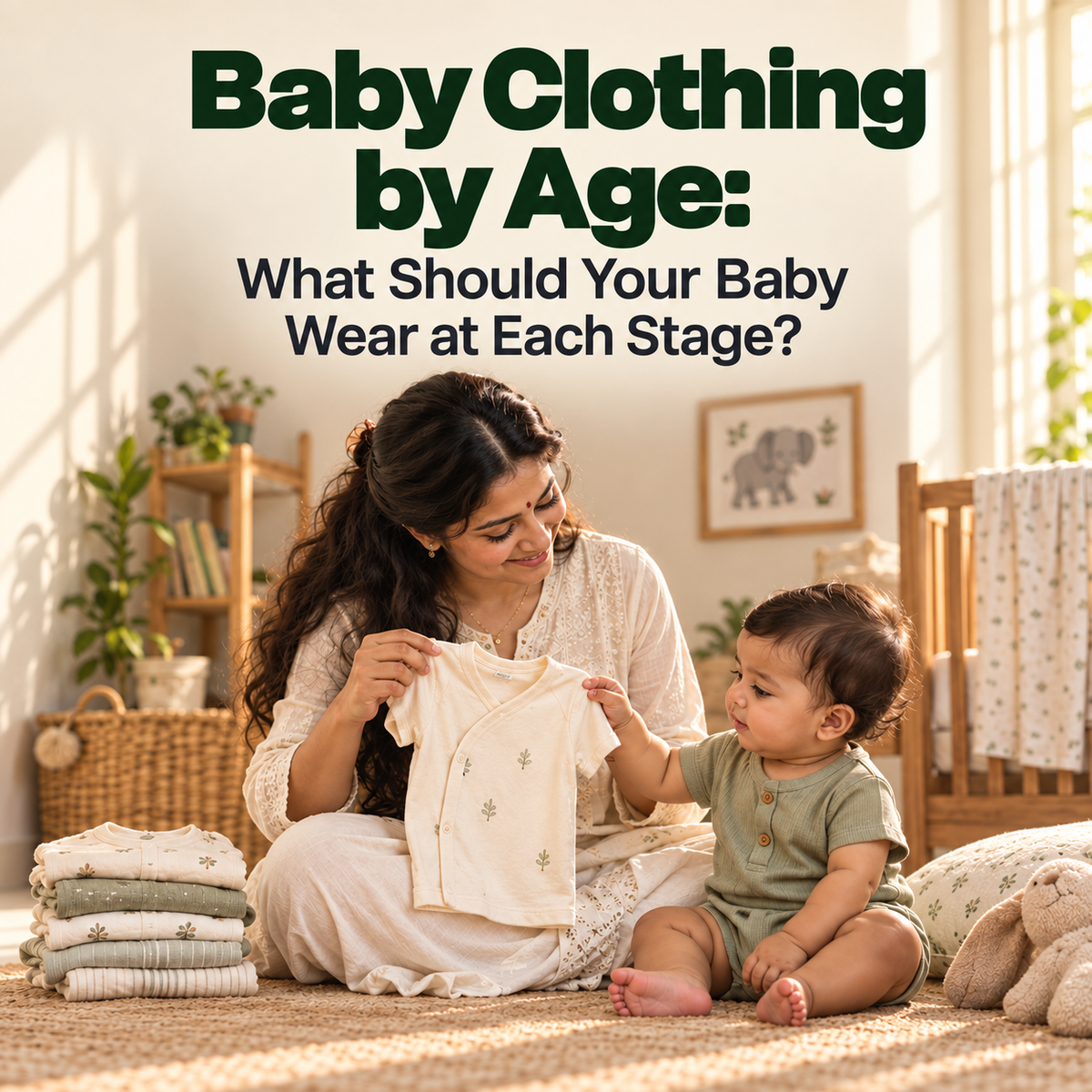
Almost every new parent asks: “Is my baby too hot or too cold?” Babies can’t always tell us when they’re uncomfortable, and their bodies react to temperature changes differently from adults. Learning how to dress your baby for different weather can make everyday care easier and help keep your little one comfortable all year round.
There’s no one outfit for India that will work year-round, as the weather can vary a lot with the season and the region. The trick is selecting breathable fabrics, dressing your baby for the temperature and regularly checking on how comfortable they are feeling.
1. Follow a Simple Layering Approach
A commonly used starting point is to dress your baby in about one additional light layer compared with what a comfortable adult would wear in the same environment. However, this is only a general guideline, not a fixed rule.
Weather, room temperature and your baby’s age and activity level can all play a part. An infant who is mostly sleeping might require different clothing than an active toddler.
Don’t count the layers, watch your baby’s temperature and behavior. It is often more useful to be willing to add or subtract a layer when needed than to stick to a rigid formula.
2. Choose Light Clothing for Hot and Humid Weather
Lightweight and breathable clothes are usually the most comfortable choice during India’s summer months. Soft cotton rompers, short-sleeved or sleeveless bodysuits and loose-fitting separates can help air circulate around your baby’s body.
Don’t put extra layers on your baby if the room is warm. Tight clothes can also make babies uncomfortable in hot weather.
It can also help to keep your baby inside during the hottest part of the day, use proper ventilation and avoid overexposure to direct sunlight. Babies should keep having their normal feeds as appropriate, to stay hydrated.
3. Know the Signs of Overheating
One of the most useful things parents can learn is how to test if their baby is too hot. Baby’s hands and feet can naturally be cooler and not always be a true indicator of their overall body temperature.
Instead, gently feel the back of your baby’s neck, chest or tummy. If your baby’s skin feels very hot or sweaty, they may be dressed too warmly or need to be moved to a cooler place.
Other signs of discomfort, such as unusual restlessness or flushed skin, may also cause you to reevaluate their clothing and environment.
When in doubt, remove an unnecessary layer and check again after a short while.
4. Dress Your Baby for Changing Monsoon Weather
Monsoon times can be unpredictable. The change in temperature is usually quick, where an afternoon that seems warm and humid can turn into chill, rain, or humid forecast.
Opting for layered clothes during this period is the best as the temperature changes. A light cotton fabric as an undergarment coupled with a light outer garment works very well for outings.
Keeping the baby dry is just as essential. It is required to change the baby's clothes immediately if they get wet or damp. Having an extra change of clothes in the diaper bag makes sense during the monsoon.
Prefer breathable fabrics that dry quickly so as to not have the wet clothes against the skin for a long time.
5. Keep Your Baby Comfortable During Winter
In the northern regions of India, it is important to make sure winter wear is suited properly, especially for infants and very young children. To avoid using one bulky garment with lots of insulation, it is better to use multiple layers of thin garments, which let you adjust your baby's clothing during the day.
In this case, it is recommended to wear a soft inner layer below a thicker one plus an outer layer to be used when going outside.
Moreover, socks and warm head coverings may be appropriate.
However, being winter does not automatically mean your baby should wear multiple heavy layers. If the temperature of the room is comfortable, it is better not to bundle the baby too much and constantly check its back (or chest) to make sure it does not overhear.
6. Consider Air-Conditioned Rooms and Outdoor Trips
It’s safe to say many of us rely on our air conditioning whether it’s within our homes, cars and in every room indoors and especially as the mercury rises. If baby is having more time on his/her hands and will be indoors within a heavily air conditioned atmosphere, a light layer may come in handy. Avoid rushing the baby from one excessively cooled room directly into the heat without this extra precaution!
Remember to bring along a ready to remove layer or light cotton wrap so the baby can feel the adjustments.
While the ambient temperature will influence comfort when you’re out, don’t overlook the influence of direct sun, wind, rain and humidity. It’s as easy as packing an extra layer!
7. Let Your Baby's Comfort Guide You
Each baby feels the temperatures differently. Some babies may feel hotter more quickly or require another layer for comfort. After a few days of taking care of your baby, you will naturally start recognizing your baby's cues and individual needs.
As opposed to dressing your baby based entirely on rules specific to age, pay close attention to the baby's temperature on his/her skin, behaviour and surroundings. Go for soft and breathable clothes that provide comfort while facilitating ease of movement, and making minor adjustments with changing weather.
Vasu Healthcare’s Baby Division aims at gentle and useful everyday baby care needs keeping in mind the diverse needs of Indian families, and the varied seasons.
Dressing your baby for changing weather needs not to be complicated. Layer appropriately with soft and breathable clothes according to the prevailing condition, and keep checking to ensure your baby feels fine. Keeping these tips in mind, and with a bit of observation and preparation, you can ensure your little baby is comfortable all throughout India’s varied climates - be it hot summers, changing monsoon or milder winters.
Frequently Asked Questions
1. How should I dress my baby in hot weather?
Choose lightweight, loose-fitting and breathable baby clothes for hot weather, such as soft cotton rompers, bodysuits and separates. Avoid unnecessary layers and check your baby’s neck, chest or tummy for signs of overheating.
2. How should I dress my baby during monsoon?
For baby clothes for monsoon, lightweight layers can help you adjust to changing temperatures. Keep your baby dry and carry an extra set of clothes, especially when going outdoors.
3. What should my baby wear in winter?
For baby winter clothing, use comfortable layers rather than one very bulky garment. A soft inner layer with an additional warm layer can be adjusted according to the room temperature and outdoor conditions.
4. How can I tell if my baby is too hot or too cold?
Check your baby’s chest, tummy or back rather than relying only on their hands and feet. Hot or sweaty skin, flushed skin or unusual restlessness may indicate that your baby is too warm.
5. What should my baby wear in an air-conditioned room?
In an air-conditioned room, a light cotton layer may be useful depending on the temperature. Keep an extra light layer available and adjust your baby’s clothing if they feel too warm or cold.