
An adequate diet is a diet that contains all three of the macronutrient groups-protein, carbohydrates, and fat-in optimum proportions to provide energy and build or repair cells, tissues, and organs, while fat is used by the body for hormones to make it work properly, for nerve cells, and for vitamin absorption. Balanced macronutrient diet principles ensure you hit each target every day. Traditionally, modern guidelines state that carbohydrates should provide approximately 45% to 65% of the calories consumed per day, proteins from about 10% to 35%, and fats as the remaining 20% to 35% of total energy intake, although exact ratios depend on the person's body and goals. Important of all, it must be clear that no macro is "bad"; instead, we need to pay attention to the quality and the balance.
How to balance macros in the Indian diet will be our practical focus here. To the Indian readers, this means combining modern scientific nutrition with time-tested, ancient Ayurvedic wisdom. This will include a discussion of practical, Indian-style meals that contain all three macros, are agni-friendly, and would work for vegetarian or non-vegetarian diets. That’s the hallmark of a balanced macronutrient diet.

What Are Macronutrients and Why Balance Them?
Macronutrients are most commonly known as macros. These macros are nutrients required by the body in large amounts for its normal functions. The three primary macronutrients include: Carbohydrates, which are required in substantial amounts; proteins and fats also fall under the category of macronutrients. Among the three, carbohydrates need no explanation as the primary function of our main energy source (other than fats) breaks down into glucose that fuels the other parts of the body, as well as the muscles. Whole grains, fruits, and vegetables provide energy that is gradually released, accompanied by fiber. (Contrast this with refined carbs; they usually spike blood sugar levels and should be limited. For example, white bread and sugary snacks are entirely refined carbohydrates.
Proteins are the building blocks of our body. It fixes cells, strengthens muscles, and supports hormones and the immune system. Complete proteins (provide all amino acids) are derived from animal products (meat, fish, eggs, milk) or in combinations of plant foods. Vegetarians get things like lentils, beans, paneer (cottage cheese), soy, nuts, and dairy; non-vegetarians also receive fish, chicken, and eggs. In India, the primary protein sources are pulses (dal, chana, rajma) and dairy, but remember that many legumes contain only one essential amino acid-and when combined with a grain (rice or roti), make a complete protein. This is what a balanced macronutrient diet is all about.
Fats provide energy and serve as a concentrated storehouse of energy is necessary for brain and cell health. Healthy unsaturated oils include olive, sesame, canola, nuts, seeds, avocados, and fatty fish (omega-3s). They carry fat-soluble vitamins (A, D, E, K) and safeguard organs. Limited intake should be prescribed to saturated fats like ghee, butter, coconut oil, and fatty meat, while trans fats (mostly found in fried and packaged foods) should be avoided.
A well-balanced Indian thali has all three macros: a portion of rice or roti (carbs), dal or chicken curry (protein + some fat), veggies (fiber + some carbs), and some oil or ghee (fat). The picture below shows a typical balanced Indian platter; notice the mix of grains-lentils/vegetables, a bit of fat/oil, which together provide a spectrum of macros.

Balancing Macronutrients: Key Guidelines
Why balance: Not all calories are created equal; 100 calories from a sweet soda won't give the same feeling of fullness or nutrition as lentils and vegetables. The focus on macros further guarantees that protein and good fats fill one's plate, and carbohydrates are not the only thing present. For example, pairing protein with carbohydrates at meals goes a long way to stabilize blood sugar and sustain energy (rather than spiking sugar). Ayurveda emphasizes this in practice: a meal with all six tastes (sweet, sour, salty, bitter, pungent, astringent) tends to be satiating and balanced. This approach defines a balanced macronutrient diet.
More general macro ratios: The common recommended range for health experts would be 45 to 60% carbs and ±15 to 25% protein and ±20 to 35% fat of one's daily calorie intake. This serves as the baseline macronutrient ratio for weight loss. The range is not small: while such an athlete may consume higher carbohydrates for an endurance event, a person trying to bulk up may prefer more protein. The ICMR/NIN guidelines for Indians recommend protein RDA at a current level of about 0.8-1 g per kg of body weight. Therefore, an adult with a weight of 60 kg would need a daily intake of around 48 to 60 grams of protein. However, many Indians do not reach this protein intake: a recent survey found that about 73% of Indians eat less protein than recommended.
It's more than quantity: Quality of macros matters. Choose whole, minimally processed foods: whole grains over refined flour, pulses and lean meats over fried snacks, fresh fruits/vegetables over sugary desserts. Practically, fill your plate with "the rainbow": vegetables of other colors, whole grains (brown rice, millets, quinoa, whole wheat rotis), a palm-sized portion of protein (dal, beans, paneer, egg, or lean meat), and a thumb-sized dollop of healthy fat (nut butter, a spoonful of oil, or ghee). This will ensure a mix of macros and micronutrients.
Portion advice: A good one is: half the plate veggies, one-quarter carb (rice/roti), and one-quarter protein (dal/meat/paneer). Use oils in moderation to adjust fat; as The Times of India notes, a healthy portion of fats should be "about a thumb-sized" amount. Indian meals are very often naturally conditioned to blend into these proportions: for example, there is a bowl of dal (protein+carbs) with two phulkas (carbs) plus mixed sabzi (carbs+veg) and a spoonful of oil, well-balanced.

Carbohydrates: Fuelling Your Body and Mind
Sometimes carbs have a bad rap, but they're a critical macro. They’re also key to any balanced macronutrient diet. Approximately 20 percent of the glucose taken in daily is utilized by the brain. The best sources of complex carbohydrates are whole grains, vegetables, and pulses, since they are digested slowly and are high in fiber. Brown rice, chapati made with multi-grain flour, oats, whole-wheat chappati, millet (ragi, jowar, bajra), sweet potatoes, and fruits are examples of complex carbohydrates.
Mind smart with carbs: Limited refinements such as sugars and flours, avoid anything that might come close to white bread, maida rotis, or sweets. The alternatives to sugary treats are the sattvic or natural ones: jaggery in moderation, seasonal fruits, or a bit of honey (never heated, per Ayurveda). If you eat simple carbs (like white rice or potatoes), pair them with a protein or healthy fat to slow absorption. For instance, dal with rice or roti, or a side of yogurt (curd) with your paratha. This way, your meal's energy release is steadier.
Gut health: Fiber-rich carbohydrates (vegetables, fruits, whole grains) support digestion, the hallmark of Ayurveda. Eating regular meals and breaking from frequent snacking helps the gut recover and regulate metabolism. Ayurveda suggests a daily routine, recommending a substantial lunch when the sun (and digestive energy) is at its peak, followed by a lighter dinner.

Protein: Building Blocks for Body Repair
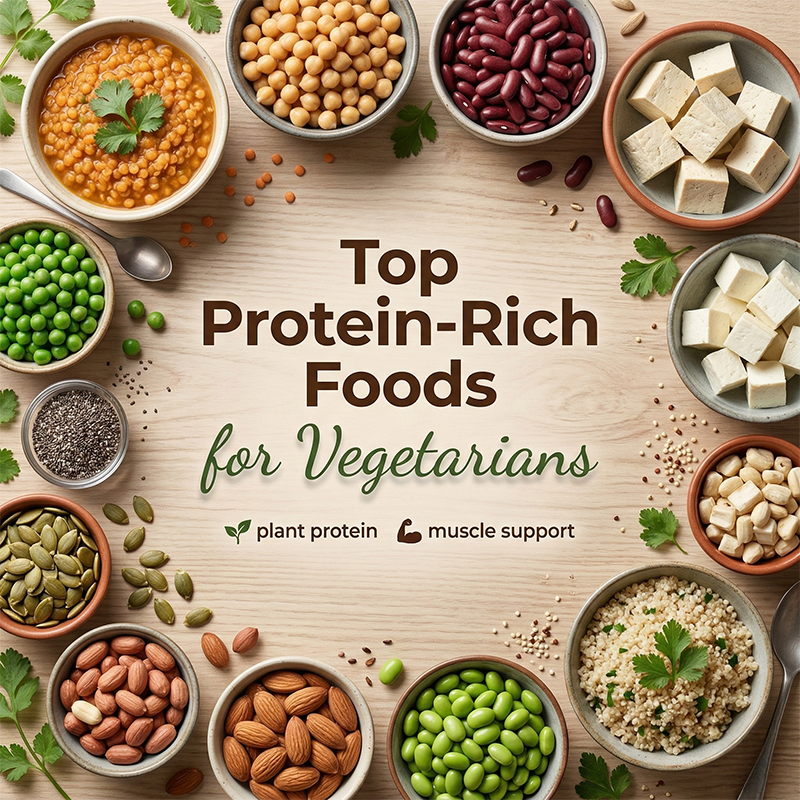
Muscle, enzymes, hormones, immune cells -- everything is built and repaired by protein. Quality protein is non‑negotiable in a balanced macronutrient diet. Active persons, elderly people, children, and vegetarians need protein, even in a country like India, which has such good sources of protein. Here are the top high-protein vegetarian foods India can’t do without:
Pulses & legumes: Toor dal, chana (chickpeas), rajma, masoor, mung beans, etc. These are staples and provide 7-9g of protein per serving. (Keep in mind that most beans lack one essential amino acid, so mix grains and pulses to make a complete protein.)
Dairy: Milk, yogurt (curd), paneer, cheese. Dairy is a protein and fat (an important combination for vegetarians). A glass of milk contains roughly 8g of protein. Fruits with yogurt make a healthy snack.
Nuts and seeds: Almonds, walnuts, peanuts, flaxseeds, chia, and pumpkin seeds. Protein, fiber, and healthy fats are a few small spoonfuls of peanut or almond butter with fruit or roti, bringing relatively quick protein supplementation.
Soy and tofu: Of course, these are also high-quality plant proteins for vegetarians.
Meat and eggs (non-vegetarians): Protein sources for them include chicken, fish, egg yolks, lean mutton, and egg whites. Some simple foods that add protein are tandoori chicken, grilled fish, omelettes, or boiled eggs.
For vegetarians, like beans and grains as in dal+rice, rajma+rice, or chole with bhatura, all of them could get the complete amino acids. The available standard in the Indian Dietetic guidelines is about 0.8 g/kg body weight (that is about 50 g protein for 60 kg). True, though, that athletes or very active persons may need more amounts (1.2-2.0 g/kg). Practically, incorporate a source of protein in each meal and snack. For example: dal with the lunch, yogurt or nuts as an evening snack, and grilled chicken or paneer curry at dinner. This keeps hunger at bay and supports muscle repair (India Today observes this — that most urban diets pay excessive heed to carbohydrates and neglect protein — up to 90% of city inhabitants were protein-deficient.)

Fats: Energy, Taste, and Vitality
Fats are hated, but they are important. Smart fat choices round out a balanced macronutrient diet. There is nothing built into life apart from what those for every cell membrane. The fat-soluble vitamins A, D, E, and K require fats for absorption. Healthy fats provide flavor and satiety to dishes such as ghee on dal or peanut oil in stir-fries.
Choices are few: go for unsaturated fats and moderate amounts of saturated fat. Good options in India include:
Oils: Mustard oil, sesame oil, peanut oil, olive oil, and even coconut oil in moderation.
Ghee: Ayurveda considers ghee the best fat for digestion and balance of Vata. Tradition holds it in high esteem as a sacred fat (used on rotis, in dal). Use sparingly because of the fact that it is high in saturated fat; small portions are advisable.
Nuts and seeds: In addition to protein, they have fats that are good for the heart. A spoonful of peanut, almond, and sesame paste adds some good fats to your meal.
Dairy: Both curd and paneer contain fat (full-fat yogurt brings probiotics as well).
For example, salmon or mackerel gives omega-3 fats, which really do go with the heart and brain if you eat fish.
Remember: trans fats from deep-fried snacks, commercial fries, cakes-and limited use of the saturated fats (ghee, butter, coconut). Most do to recognize that healthy fats...might have to be spooned in moderation example, about a thumb-sized portion per meal, in combination with not using more saturated fats from unsaturated names: This excludes details from The Times of India.
Make note of this: fat is calorically dense, so a little goes a long way. But again, it is not healthy to skip all fats. That can be ensured by cooking with a little oil or ghee (around a teaspoon of ghee/oil per person per meal) and eating up to a few small handfuls of nuts a day. For example, dal cooked in a little ghee or tempering of mustard seeds, or chapatis roasted with a smear of ghee, would surely satisfy fat needs.

Ayurveda Insights: Marrying Tradition with Science
From an Ayurvedic perspective, the system does not conceptually match with the notion of counting macros, yet it surprisingly coincides with the other aspects of balanced nourishment. That synergy is the soul of a balanced macronutrient diet. That’s why we’ll share key Ayurvedic tips for a balanced diet next. According to Ayurveda, a true balanced diet involves including all six tastes (shad-rasas): sweet, sour, salty, bitter, pungent, and astringent. In every meal to keep cravings at bay and increase the diversity of nutrients. For instance, a vegetable sabzi (pungent+bitter), lentils with cilantro chutney (pungent+citrus sour), rice with a little ghee (sweet), salad with cucumber (astringent), and a lemon wedge (sour) together cover the tastes.
Furthermore, Ayurveda emphasizes the diet according to each individual's dosha (constitution), which, in today's terms, denotes differences in metabolism. The Vata person, because of a light build and fast metabolism, might therefore be one who requires more warming fats and proteins to keep them grounded. Pitta and Kapha people will be more moderate, with Pitta receiving moderation in carbs and cooling from foods like cucumber and coconut, while Kapha has to facilitate metabolism by keeping carbs and fats lighter, alongside favoring greens, spicy ginger, and high protein. Even if you may not have an exact identification of your dosha, these ideas inherently highlight: Choose foods to support your digestion and energy.
Support your Agni (digestive fire): The when and how of your eating, according to Ayurveda: Eat at regular times, seated, and undistracted, chewing well. Don't overeat; Ayurveda states that about 80% satisfied is best. Digestive spices: Use cumin, ginger, black pepper, and turmeric to help digest all three macros. Tempering your dal with cumin and hing, adding ginger to your chutney, or sipping ginger tea after a large meal would be pretty simple.
Season and local foods: Ayurveda suggests consuming fresh, seasonal foods. Summer (Pitta) is for cooling fruits and buttermilk, whereas winter (Vata) likes warming stews and good fats. Macros-wise, stick to non-processed forms: whole grains and dals, local vegetables, and traditional preparations. A multigrain khichdi with veggies and a little ghee is both sattvic and macronutrient-complete.
Meal time: Ayurvedic Clock: According to Ayurveda, meal times should coincide with those of the sun (when your digestive power is strongest). Midday becomes your main meal, whereas the lighter meal is taken at dinner time. It is very much true that the slower metabolism indeed starts after dark. Hence, enjoy a hearty lunch with glee (mixed rice/chapati, dal, sabzi, salad), while keep it lightly for dinner (like light dal soup/khichdi, with yogurt).
Breakfast: Some hot filling thing (like upma with Jaggery plus a spoonful of peanut chutney for some fat and protein);
Lunch: Greatest balanced meal near noon (ex: rice/roti, dal or chicken curry, salad, vegetables, curd).
Dinner: Easy peasy straight, could be buy millet porridge or dal soup with a few chapatis.
Ayurveda warns against heavy late-night meals (not just protein shakes, but extravagant dishes in general) that overwhelm digestion and disrupt sleep.
Bringing these traditions together with those macro guidelines combines the best of both worlds: Eat mindfully, enjoy diverse flavors, and somehow satisfy protein, carb, and fat. An integrated way of doing this allows you to reach body composition goals, says Stella Nuova Wellness, without compromising digestive health".

Practical Tips for Everyday Meals
Plate with balance: At every meal, proactively include a protein, a carb, and a fat. This is the foundation of a balanced diet Indian meal plan. For example, thali with roti (carb), rajma or chicken (protein + some fat), sabzi (carb + fiber), yogurt (protein + fat), and salad (fiber).
Intelligent snacking: Instead of chips or sweets, favor nuts, fruit with yogurt, or chaas (buttermilk) with roasted chana nuts. It provides good energy and precludes overeating at meals.
Vegetarian moves: Pair grains with pulses (khichdi, dal chawal) to maximize protein quality. Toss in some cubes of paneer to curries or stir-fries. Have it with a drink of milk or lassi.
Non-veg tricks: For breakfast or dinner, incorporate some egg (whether hard-boiled, scrambled, or in an omelet). Grill or stew lean chicken/fish with a bounty of vegetables. All fried anathema.
Portion control: Plate model (half veggie, quarter protein, quarter carbs). Automatically balances macros and ensures fiber content.
Hydrate & season: Water or herbal tea. Use spices and citrus (lemon, raw mango) as flavor enhancers, not copious salt or sugar. Stay hydrated with water, coconut water, and unsweetened lassi (curd drink).
Tune in to your body: Eat when hungry, stop when full. Sleep and stress affect hunger hormones- wish for good rest.
Diets ought to change just as you will. On festivals or special meals, relish your food with awareness, but balance it out on the rest of the day. A little of sweets when almost all of your meals are balanced is just fine. Consistent lifestyle is what we aim for, not perfection.
FAQs
Q: What is the ideal macro ratio for losing weight?
A: This isn't a one-size-fits-all. For example, moderate carbohydrates (40-50%) and a slightly higher protein intake (25-35%) can be beneficial to keep muscles intact while weight loss occurs, but using high-quality foods to create A calorie deficit is the key factor overall. Consume whole grains, lean protein, and healthy fats while avoiding excess added sugars and fried foods.
Q: How to get enough protein as a vegetarian?
A: There are many varieties of plant proteins, which would figure out the colorful plate for vegetarians to meet their daily intake of protein. For example, dal (a type of lentil), beans, paneer, milk, yogurt, nuts, and seeds should be consumed by everyone every day. Taking rajma or chana curry with rice and adding a cup of milk or curd plus a handful of nuts gives one approximately 50 g protein easily. Complete amino acids are available by combining legumes with grains (rice-dal, millet roti + dal).
Q: I want to count the macros instead of calories.
A: Macro-tracking can be educational (grams protein/carb/fat), but that's not essential. For most people, it's much simpler just to eat balanced meals and practice portion control. As Ayurveda would agree, tuning into your body is key - eat until about 80% full and choose whole foods. If you do track, stake is in making it a guide, not a rule - the goal is a sustainable healthy routine, not an obsession over numbers.
Q: What is the difference between Ayurvedic diet and simply balancing macros?
A: Ayurveda prefers food qualities and individual needs above strict macros. It recommends fresh, seasonal foods with all six tastes plus good digestion (Agni) in each meal; prefers warm, cooked meals against cold food; and includes spices that favor digestion. This would balance macros with honoring Ayurveda by enjoying sattvic whole foods for each macro (e.g. whole grains, fresh vegetables, organic dairy, ghee) and eating mindfully at regular times.
Q: What are some Ayurvedic foods to weight and health balance?
A: Many, but a few straightforward examples include warming stews with lentils and vegetables, kichadi (mung dal + rice), ginger tea, buttermilk with roasted cumin (pachak), and barley or wheat porridge with ghee. Turmeric, ginger, and cumin are essential for aiding digestion and boosting metabolism. A pinch of cinnamon or black pepper in your tea can also help stabilize blood sugar. Savor each bite and stop eating before you feel stuffed. This is known as the "Matra parinam of Ayurveda.