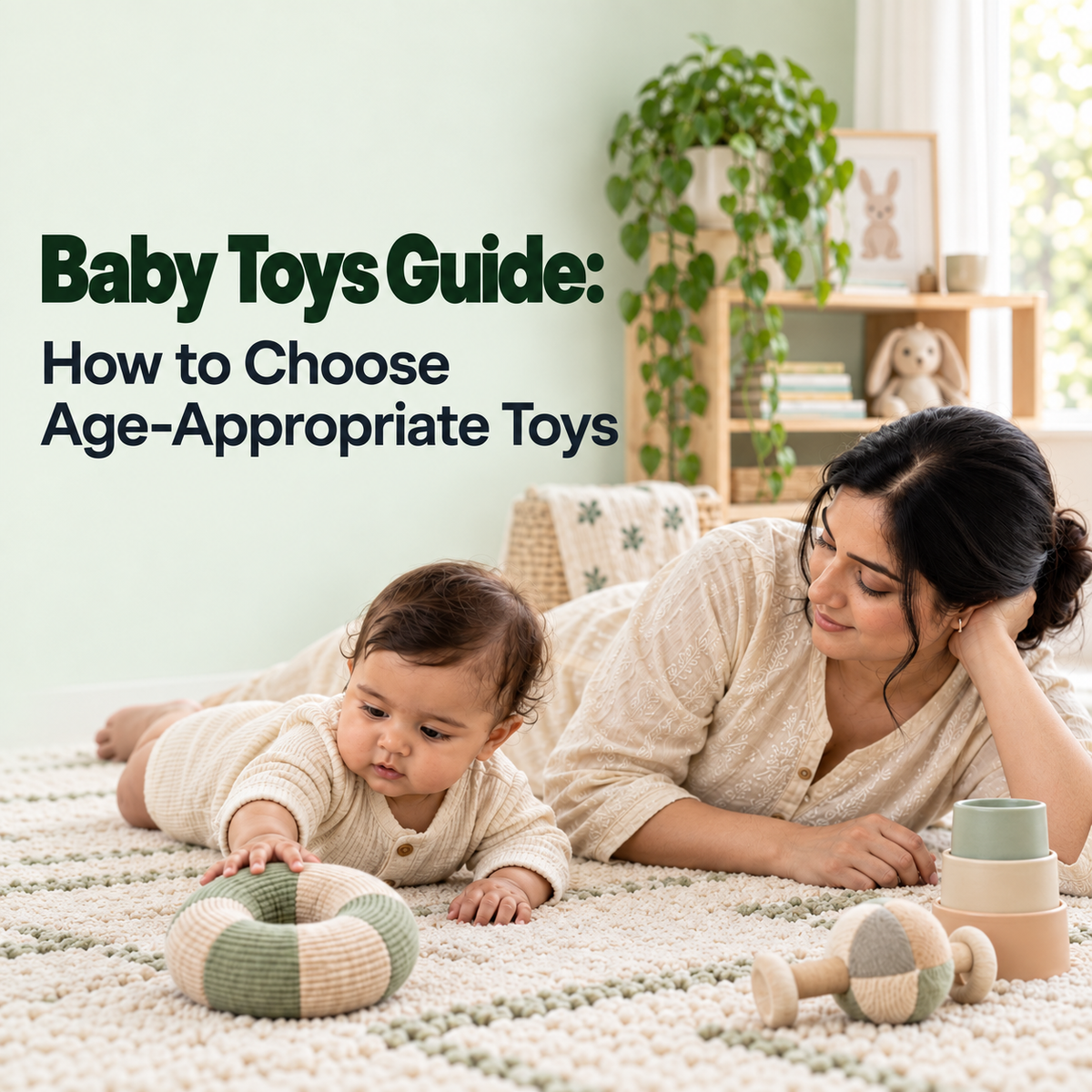
The phrase “educational toys for Babies” can sound a little complicated when your baby is still learning to grasp, roll, sit, or crawl. But for babies, learning does not happen through formal lessons. It happens naturally through play, movement, repetition, and exploring the world around them.
An educational toy is simply something that encourages your baby to use their senses, move their body, understand cause and effect, or develop early problem-solving skills. The best choices are not necessarily the most expensive or technologically advanced ones. Simple, age-appropriate toys can offer plenty of opportunities for learning.
 1. What Makes a Toy Educational for Babies?
For babies, almost any safe and engaging play experience can become a learning opportunity. A toy can support development by encouraging your baby to look, listen, touch, grasp, move, or interact with an object.
For example, reaching for a toy can help develop hand-eye coordination, while shaking a rattle teaches your baby that their movement can create a sound. Stacking objects later on introduces early concepts such as size, balance, and position.
Instead of choosing toys simply because they are labelled “educational,” look for options that encourage active participation and are suitable for your baby's current stage.
 2. Try Cause-and-Effect Toys
Cause-and-effect toys are useful for helping babies understand that their actions can create a result. Pressing a button, shaking a toy, turning a wheel, or dropping an object may produce a sound or movement.
These simple interactions can become particularly interesting as babies grow and begin intentionally repeating actions to see what happens.
Choose toys with simple mechanisms that are designed for your baby's age. Avoid complicated toys with small components that may be unsuitable for younger babies.
 3. Explore Stacking, Sorting, and Building Toys
As babies become more confident with their hands, stacking and building toys can encourage coordination and early problem-solving.
Large stacking rings, nesting cups, soft blocks, and age-appropriate shape-sorting toys give babies opportunities to experiment. At first, your baby may simply knock everything over or put pieces in their mouth. That is part of exploration too.
As they grow, they gradually begin to understand differences in size, shape, position, and balance. Choose toys with pieces that are large enough to avoid choking risks and appropriate for your child's age.
 4. Encourage Sensory Exploration
Babies learn a great deal through their senses, making sensory toys a useful part of playtime. Toys with different textures, gentle sounds, colours, and shapes can give babies opportunities to explore how things feel and respond.
Soft sensory balls, textured fabric books, crinkle toys, and other baby-safe sensory objects can be introduced according to your baby's developmental stage.
Remember that babies often explore objects with their mouths. This makes it particularly important to choose toys that are securely made, easy to clean, and free from small detachable parts.
 5. Introduce Books and Musical Toys
Books are among the simplest educational toys for babies because they can support early language development while also encouraging visual attention.
You do not need to wait until your baby understands words. Looking at simple pictures together, pointing at objects, naming them, and reading aloud exposes your baby to sounds and language patterns. Sturdy board books are particularly practical for babies who like to grab, turn, and explore pages.
Musical toys can provide another form of sensory exploration. Simple shakers, baby-safe instruments, and toys that produce gentle sounds can introduce babies to rhythm and different sounds.
 6. Choose Toys That Encourage Movement
Learning is not only about thinking and sensing. Physical movement is also an important part of early development.
Soft balls, activity toys that encourage reaching, and suitable push toys for older babies can encourage movement and coordination. As your baby progresses from reaching and rolling to crawling, standing, and walking, their play preferences will naturally change.
Choose toys that encourage movement without forcing your baby to perform an activity before they are developmentally ready. Allowing them to explore at their own pace is an important part of meaningful play.
 7. Focus on Safety, Simplicity, and Interaction
You do not need dozens of educational toys to support your baby's development. A small selection of age-appropriate toys can provide plenty of opportunities for exploration, especially when you rotate them regularly.
Most importantly, your involvement matters. Talking to your baby, naming objects, responding to their sounds, singing, reading, and playing alongside them can make a simple toy much more engaging.
Before giving your baby any toy, check its recommended age range and inspect it for loose parts, sharp edges, damaged sections, magnets, batteries, or other potential hazards. Supervise play appropriately, particularly when your baby is using a new toy.
Vasu Healthcare's Baby Division focuses on gentle and practical everyday baby care needs, recognising that play is an important part of a child's early years.
Educational toys for babies do not have to be complicated, expensive, or highly structured. A simple stacking toy, sensory ball, board book, rattle, or soft block can become a valuable learning tool when it matches your baby's stage and interests. Give your baby time to explore, repeat, make mistakes, and discover things independently — because for little ones, that is what learning through play is all about.
Frequently Asked Questions
1. What are educational toys for babies?
Educational toys for babies are age-appropriate toys that encourage skills such as sensory exploration, grasping, coordination, movement, communication, and early problem-solving through play.
2. Which toys help with a baby's development?
Toys such as stacking rings, soft blocks, sensory balls, rattles, board books, and cause-and-effect toys can encourage different areas of early development. Choose toys according to your baby's age and abilities.
3. Are sensory toys good for babies?
Yes, sensory toys for babies can encourage exploration through textures, colours, shapes and gentle sounds. Always choose toys that are securely made, easy to clean and free from small detachable parts.
4. How do I choose safe educational toys for my baby?
When choosing safe educational toys, check the recommended age range and look for potential hazards such as small parts, sharp edges, loose components, magnets and accessible batteries. Inspect toys regularly for damage.
5. Do babies need expensive educational toys to learn?
No. Babies can learn through simple educational toys such as blocks, stacking cups, rattles and books. Talking, singing, reading and playing together can make everyday play even more meaningful.