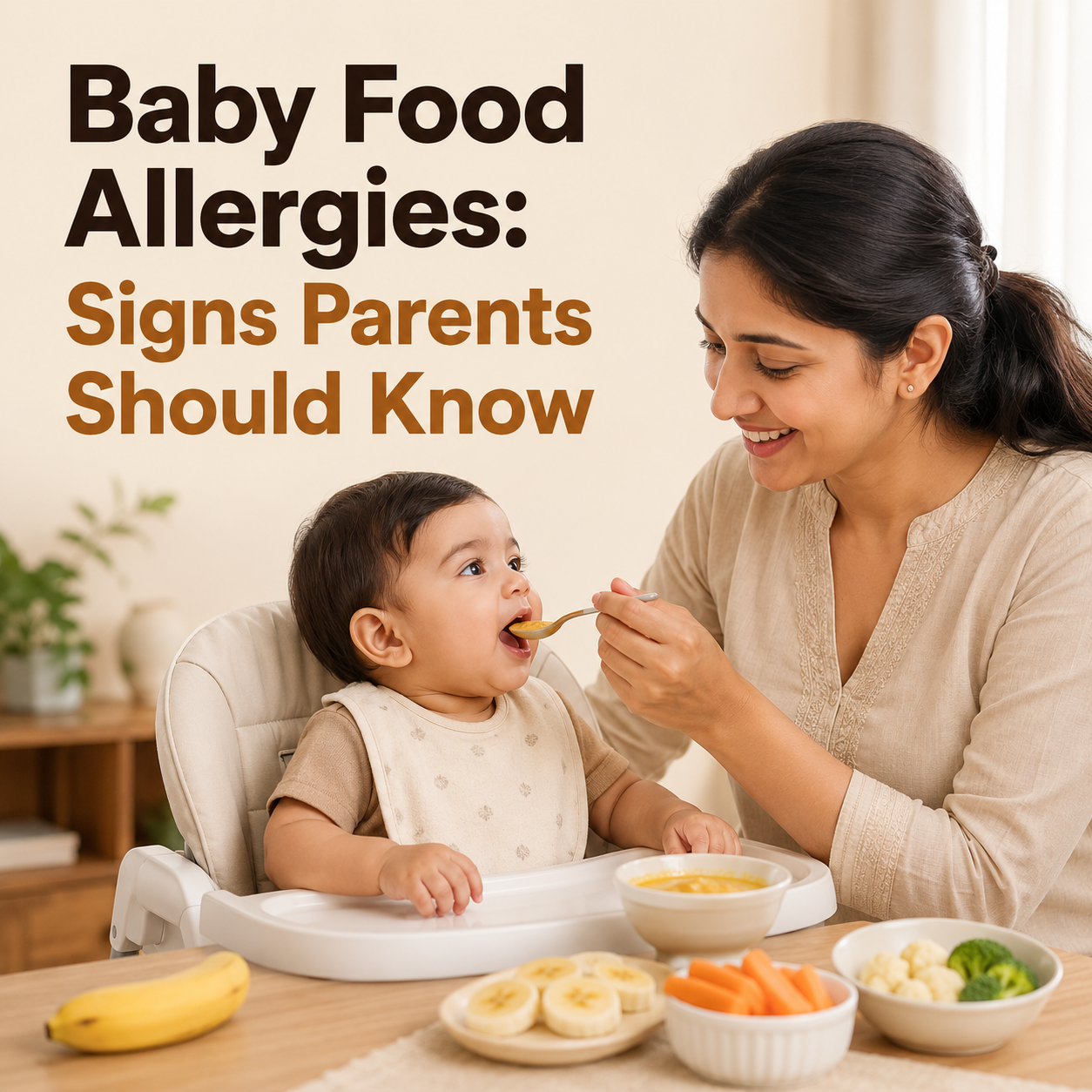
Introducing new foods to your baby is an exciting milestone, but it can also leave parents wondering when to start solid foods, what foods to introduce first, how much to feed, and when to introduce new textures or common allergens. Learning how to introduce new foods to your baby safely can make this transition easier while helping your little one explore different flavours and textures at their own pace.
Note: This article is intended to contain general information and should not be viewed as a substitute for individual advice from a paediatrician or other trained health care provider.
 When Should You Start Introducing New Foods to Your Baby?
Most babies can begin complementary foods around 6 months, when they show signs of developmental readiness. These may include sitting with support, having good head and neck control, reaching for food and being able to swallow food rather than pushing it out with their tongue. Breast milk or infant formula continues to provide important nutrition during this stage, while complementary foods are gradually introduced alongside milk feeds rather than replacing them immediately. CDC: When and How to Introduce Solid Foods
Every baby develops differently, so there is no need to rush the transition or follow a strict feeding schedule from the beginning. Start with age-appropriate baby foods and textures, introduce new foods thoughtfully and observe how your baby responds. If you are unsure whether your baby is ready for complementary feeding or have questions about introducing specific foods, speak with your paediatrician or another qualified healthcare professional.
 How to Introduce New Foods to Your Baby Safely
There is no need to turn the first few months of weaning into a complicated schedule. A simple, observant approach usually works well.
1. Begin With Simple, Age-Appropriate Foods
Begin by offering the foods that are appropriate for your baby's age. Soft cooked vegetables, mashed fruits, cereals, pulses and other nutritious family foods prepared in a baby-safe form can be introduced as appropriate.
The first few tastes may be tiny. Your baby may eat only a spoonful-or may simply play with the food.
That is normal.
At this stage, your baby is learning what food is, not expected to finish a full meal.
2. Introduce Different Flavours Gradually
It may take babies a while to get used to new tastes. When your baby rejects a food, it doesn't necessarily mean they don't like it anymore.
Offer the food at another time and do not coerce your baby to eat it.
There is a relaxed approach to meals that can help make it more positive.
3. Pay Attention to Food Texture
Moving from smooth purées to thicker and softer textures is an important part of learning to eat.
As your baby develops the skills needed for eating, gradually offer more textured foods that are appropriately soft and easy to manage.
Avoid giving foods in forms that can cause choking. Whole nuts, hard raw vegetables and other unsafe shapes or textures should not be given to young babies.
For practical guidance, parents can refer to CDC infant and toddler nutrition guidance.
 Introducing Common Food Allergens
One question many parents have is when to introduce allergenic foods to babies.
Common food allergens include:
- Eggs
- Peanuts and tree nuts
- Milk and dairy
- Wheat
- Soy
- Sesame
- Fish
- Shellfish
Current guidance does not recommend automatically delaying common allergenic foods once a baby is developmentally ready for complementary foods. However, babies with severe eczema or an existing egg allergy may need specific medical guidance before peanut is introduced. American Academy of Pediatrics: Introducing Common Food Allergens
Always introduce potentially allergenic foods in a baby-safe form. For example, whole nuts can be a choking hazard and should never be offered to a baby whole.
If your baby develops hives, swelling, repeated vomiting, coughing, wheezing or breathing difficulty after eating a food, stop offering that food and seek appropriate medical advice. Breathing difficulty or significant swelling requires immediate emergency medical attention.
 Should You Introduce One Food at a Time?
When your baby is beginning solids, introducing individual new foods can make it easier to identify a possible reaction.
For example, instead of introducing three completely new foods together, you could offer one new ingredient alongside foods your baby has already tolerated.
Keep a simple note of:
- New food introduced
- Date it was offered
- Approximate amount
- Any unusual symptoms
This does not need to become a detailed diary. A few simple notes on your phone can be enough.
As your baby's food variety grows, you can gradually combine ingredients that your baby has already tried.
 Watch Your Baby's Response to New Foods
Parents sometimes worry when their baby's stool changes after starting solids. Some changes in colour, consistency or frequency can happen as the diet becomes more varied.
However, symptoms such as repeated vomiting, significant diarrhoea, hives, swelling or breathing problems should not be dismissed.
A useful rule is: observe, don't panic- and don't diagnose on your own.
If you notice a pattern after a particular food, speak with your paediatrician.
The American Academy of Pediatrics food allergy guide also provides information on recognising possible food allergy symptoms in children.
 Make Mealtimes Safe and Comfortable
Plan nutritious meals and make them safe and comfortable.
When it comes to food safety, it's just as crucial as selecting healthy ingredients.
Keep these simple habits in mind:
- Always supervise your baby while eating.
- Preparing and serving food in an age-appropriate manner.
- Avoid choking hazards.
- Hold baby upright when feeding.
- Don't force your baby to finish food.
- When developmentally appropriate, let your baby play with food.
- Allow a peaceful and quiet dining experience without excessive noise.
The ability to eat is something that comes with practice. The learning process is messy fingers and rejecting food before the high chair and some bites are taken.
Common Mistakes Parents Can Avoid
Starting solids can come with plenty of advice from family, friends and social media. Not all of it is suitable for every baby.
Try to avoid:
Comparing your baby's eating with another baby's: Every child develops at their own pace.
Feeding as a battle: Making feeding stressful by forcing food.
Unsafe textures: A nutritious food does not have to be unsafe if served in an unsafe form.
Preventing all "no-nos" without doctor's orders: Excessive dietary restrictions may result in a less diversified diet.
Large amounts of food: Early solids mean learning and then eating more and more.
 How to Introduce New Foods to Your Baby Safely: Final Thoughts
The best way to introduce safely new foods to your baby is not to rush into a fixed time schedule, but to focus on your baby's readiness and response, being mindful of their safety.
Offer proper foods and textures; introduce foods gradually; provide common allergen foods safely when appropriate; monitor for unexpected reactions. Most important of all, give your baby time to learn.
Your baby may enjoy a food one day and not the next. The same food could be on the ground on another day. That's okay. Feeding is a process and not a test.
Frequently Asked Questions
1. What is the best first food for a baby?
There is no single food that every baby must start with. Age-appropriate, nutritious foods with a suitable texture can be introduced based on your baby's readiness and your family's usual diet.
2. How often should I introduce new foods to my baby?
There is no need to rush. When your baby is beginning solids, introducing individual new foods can make it easier to notice possible reactions. Over time, you can offer a wider variety of foods.
3. When can babies eat common allergens?
Common allergens can generally be introduced when babies are developmentally ready for complementary foods. If your baby has severe eczema, an existing food allergy or another relevant medical concern, speak with your paediatrician first.
4. How do I know if my baby is allergic to a new food?
Possible signs include hives, swelling, repeated vomiting, coughing, wheezing or breathing difficulty. If your baby has trouble breathing or significant swelling, seek emergency medical care immediately.
5. Can I give my baby the same food every day?
Offering variety over time is helpful because it allows babies to experience different flavours and nutrients. Familiar foods can still be offered alongside new foods.
6. Should I force my baby to eat new foods?
No. Babies may need repeated opportunities to become comfortable with unfamiliar foods. Offer the food without pressure and follow your baby's hunger and fullness cues.