
Introducing your baby's first foods might be thrilling, baffling and emotional all in one! Before long, your little one is sipping her milk, and then you have to wonder, should she be eating solids?
Thus, when do Babies start eating solid foods? Complementary foods are typically started with infants around 6 months of age, in addition to breast milk or infant formula. But that's not the only story the calendar can tell. Your baby's readiness and development is also important.
Complementary feeding is recommended by the World Health Organisation (WHO) to start around six months of age when the baby's nutritional requirements start to increase.

When Can Babies Start Eating Solid Foods?
For most babies, around 6 months is the recommended time to begin complementary feeding.
The important word here is complementary. Starting solid foods does not mean suddenly stopping breastfeeding or replacing formula with meals. Milk continues to play an important role while your baby slowly learns to eat other foods.
At first, your baby's meals may be very small. The goal is not to make your baby finish a bowl. It is about helping them become comfortable with new tastes, smells, textures and the simple routine of eating.
WHO recommends starting with small amounts and gradually increasing the quantity, variety and consistency of foods as the child grows.
If your baby was born prematurely or has a medical, developmental or feeding concern, talk to your paediatrician before introducing solids.
Signs Your Baby Is Ready for Solid Foods
Age is only one part of the picture. Before introducing solid foods, look at what your baby can do.
Some common signs of readiness include:
-
Sitting upright with good head and neck control
-
Showing interest in food when family members are eating
-
Bringing objects towards the mouth
-
Being able to swallow food instead of repeatedly pushing it out with the tongue
-
Staying comfortably seated during feeding
-
Showing better control of movements around mealtime
You do not need to wait for your baby to have teeth. Babies can begin with appropriately prepared soft foods because eating is also about learning to move food safely around the mouth.
If you are unsure whether your baby is ready, it is better to ask your child's healthcare professional than to start simply because another baby of the same age has started eating.

What Are the Best First Foods for a 6-Month-Old Baby?
There is no single food that every baby has to eat first.
The best approach is to gradually introduce a variety of nutritious foods in textures your baby can manage.
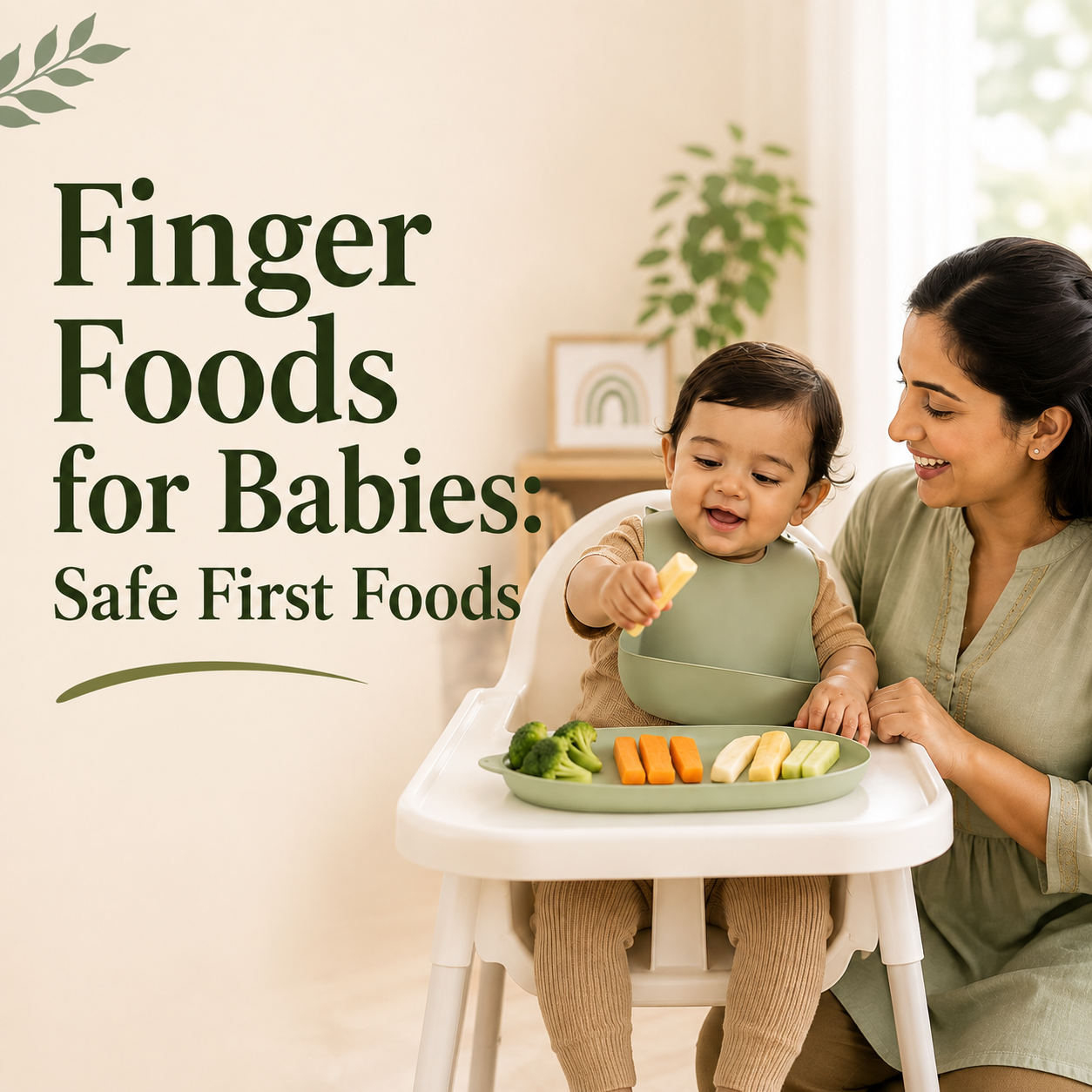
You could consider foods such as:
-
Soft-cooked vegetables such as carrot, pumpkin, peas and sweet potato
-
Mashed banana, avocado or pear
-
Soft-cooked lentils and beans
-
Well-cooked rice or other suitable grains
-
Plain yoghurt without added sugar, when appropriate
-
Well-cooked egg
-
Soft, appropriately prepared meat, fish or chicken
-
Other family foods modified to a suitable texture and without excess salt or sugar
The CDC also recommends offering a variety of vegetables, fruits, proteins, whole grains and dairy foods without added sugars as babies progress with complementary feeding.
For Indian families, first foods do not have to mean packaged baby food. Simple home-prepared foods such as soft khichdi, mashed vegetables, dal or suitable fruit can be introduced in age-appropriate textures.
The key is not whether the food looks fancy. It is whether it is nutritious, safely prepared and suitable for your baby's stage.
How to Introduce Solid Foods to a Baby
The first few meals may not look anything like a proper meal.
Start with a small quantity when your baby is awake, comfortable and not overly hungry or tired. Let your baby look at the food, touch it and taste it.
Some days, your baby may accept a few spoonfuls. On another day, they may turn their head away after one bite.
That is okay.
Responsive feeding is listening to your baby's cues for need. Gently encourage your baby to eat, but don't pressure him. WHO recommends responsive feeding and development of variety of foods and consistency as children get older.
How many times should baby eat solids a day?
The WHO also has recommendations for complementary feeding: Babies between 6- 8 months of age should receive 2- 3 meals of complementary food a day, while for 9 months and older, the recommendation is for 3- 4 meals of complementary food per day.
These are only general guidelines and not a definite schedule for all babies. Your child's appetite and growth will fluctuate from day to day.

The steps for moving from purees to other textures.
Sometimes parents are concerned about the length of time they need to stay on smooth purees.
The consistency of food can be increased as your baby's eating skills improve. As babies grow, WHO suggests progressively introducing more solid foods and variety. Most babies will be ready to handle finger foods around 8 months old. .
The transition does not need to happen overnight.
You might move from:
Smooth - mashed - thicker/lumpy - soft finger foods
Always choose food shapes, sizes and textures that match your baby's developmental abilities.
Foods to Avoid for Babies
Starting solids also means learning what not to offer.
Avoid honey before 6 months
Honey should not be given to babies under six months because of the risk of infant botulism. This includes adding honey to food, drinks or other preparations.
Limit foods with added sugar and excess salt
Babies do not need added sugar in their diet. It is better to allow them to experience the natural flavours of foods.
Be careful with choking hazards
Whole nuts, hard pieces of food, whole grapes, popcorn, chunks of meat and spoonfuls of thick nut butter can be choking hazards.
Food should be cooked and prepared according to your baby's developmental stage. Babies should also sit upright while eating and should always be supervised during meals.

What About Vasu Swarnaprashan?
Once parents start exploring baby and child wellness, they may also come across traditional Ayurvedic products such as Vasu Swarnaprashan.
It is important to keep this separate from complementary feeding. Swarnaprashan is not a substitute for breast milk, infant formula or nutritious solid foods, and it should not be treated as a first food.
Vasu's current product information lists ingredients including Suvarna Bhasma, Brahmi, Shankhpushpi, Vacha and honey. Because honey should not be given to children under 6 months, parents should give this product to a baby with appropriate professional advice.
For older children, parents interested in incorporating a traditional Ayurvedic wellness product into their child's routine should discuss its suitability and use with a qualified healthcare professional or Ayurvedic practitioner.
Learn more about Vasu Swarnaprashan

Common Mistakes Parents Make When Starting Solid Foods
Starting baby food does not have to become a stressful project.
A few mistakes are worth avoiding:
Starting because of pressure from others: Your neighbour's baby, friend's baby or cousin's baby may have a different feeding timeline.
Expecting large portions immediately: Your baby is learning. Small amounts are completely normal in the beginning.
Forcing every bite: Feeding should be responsive rather than a daily struggle.
Offering only one type of texture: Gradually introducing suitable textures helps your baby learn different eating skills.
Forgetting choking safety: Food preparation matters just as much as the food itself.
Adding sugar or honey to make food tastier: Babies can learn to enjoy natural flavours without added sweetness.
What Should a Simple First-Meal Routine Look Like?
A simple routine could look like this:
1. Choose a calm time: Avoid introducing a new food when your baby is extremely tired or upset.
2. Seat your baby safely: Keep your baby upright and supervised.
3. Offer a small amount: Let your baby decide how much they want to eat.
4. Introduce one food at a time when appropriate: This can make it easier to notice if your baby reacts differently to a particular food.
5. Gradually add variety: Include different fruits, vegetables, grains and protein-rich foods over time.
6. Continue milk feeds: Solids complement breastfeeding or formula rather than immediately replacing them.
The aim is to build a positive relationship with food, not to create a perfect meal plan from day one.
Final Thoughts: When Can Babies Start Eating Solid Foods?
So, when can babies start eating solid foods? For most babies, complementary feeding begins at around six months, when their nutritional needs and developmental readiness make the transition appropriate.
But remember: there is no prize for starting first.
Take your baby's cues seriously, begin with simple and suitable first foods for a 6-month-old baby, gradually introduce different textures and flavours, and keep food preparation and choking safety in mind.
Most importantly, When Can Babies Start Eating Solid Foods? is not simply a question of age. It is about recognising when your baby is ready and making the transition calmly, safely and patiently.
Frequently Asked Questions
1. Can a 4-month-old baby eat solid foods?
Complementary feeding is generally recommended from around six months. If you are considering starting earlier, discuss it with your baby's paediatrician rather than relying only on signs such as increased appetite.
2. Does my baby need teeth before starting solids?
No. Teeth are not a requirement for beginning age-appropriate foods. Developmental readiness and the ability to safely manage food are more important.
3. What is the first food for a 6-month-old baby?
There is no compulsory first food. Soft vegetables, fruits, grains, lentils and other nutritious foods can be introduced in suitable textures.
4. Can I continue breastfeeding after starting solids?
Yes. Starting complementary foods does not mean breastfeeding has to stop. WHO recommends continued breastfeeding alongside complementary foods.
5. When should I speak to a doctor about feeding?
Talk to your paediatrician if your baby has difficulty swallowing, repeatedly coughs or chokes during meals, has an existing food allergy, has feeding difficulties or you have concerns about growth or development.
If this guide helped you feel a little more confident about your baby's first foods, share it with another parent preparing for the same milestone, and explore more practical baby-care blogs from Vasu.